Currency
Currency


Couldn't load pickup availability
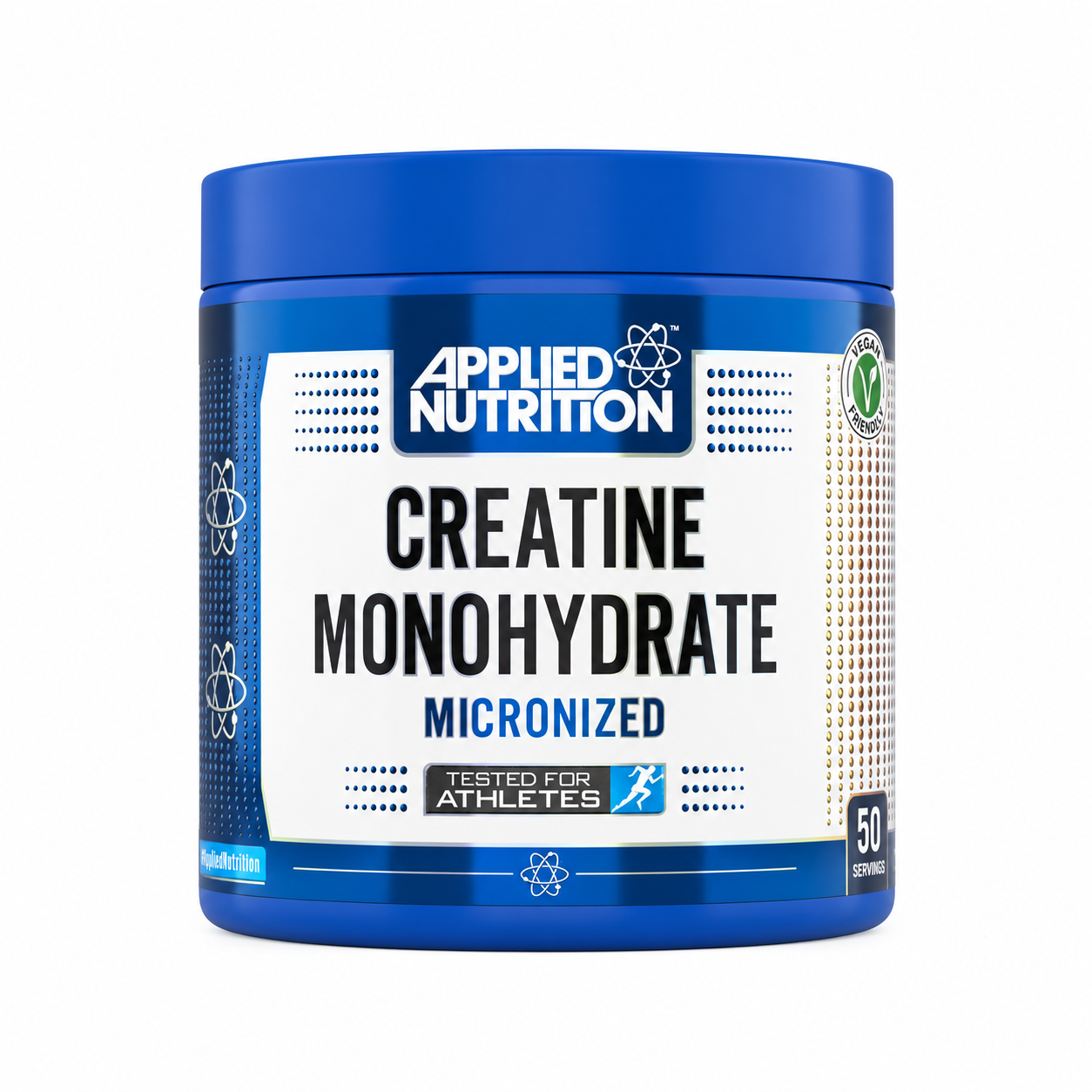
Creatine Monohydrate | Brain Energy, Cognitive Performance, Sleep Repair, Cellular Recovery & Muscle Strength
Creatine Monohydrate is no longer just a supplement for bodybuilders. It is one of the most fascinating compounds in modern nutritional science because its biological importance extends far beyond muscle size and athletic performance. Every thought, movement, nerve signal and cellular maintenance process requires energy, and Creatine plays a fundamental role in helping the body regenerate adenosine triphosphate (ATP), the molecule responsible for powering countless biological functions. Inside cells, Creatine is converted into phosphocreatine, forming a readily available energy reserve that helps restore ATP when demand increases. This is particularly relevant to the brain, an organ that consumes a substantial proportion of the body's energy despite representing only a small percentage of total body weight. Memory formation, concentration, information processing and neurological signalling all depend on reliable energy availability. Researchers are now investigating whether increasing Creatine availability can support cognitive performance during periods of increased mental demand, including sleep deprivation, prolonged concentration and ageing. Unlike caffeine, Creatine does not work by stimulating the nervous system. Its appeal lies in supporting the cellular energy systems that the brain and body already use. This makes it particularly interesting for professionals, students, shift workers, older adults and anyone interested in the relationship between cellular energy and long-term health.
Perhaps the most compelling emerging research concerns Creatine's potential to support the sleep-deprived brain. Sleep deprivation places considerable metabolic stress on neural tissue, often reducing attention, reaction speed, working memory and the ability to process complex information. In a 2024 human study, researchers administered a single high dose of Creatine Monohydrate during prolonged sleep deprivation and observed changes in cerebral energy metabolism alongside improvements in selected measures of cognitive performance and processing speed. Further research has investigated whether lower experimental doses can produce similar effects. Creatine can help reduce certain aspects of fatigue-related cognitive deterioration by supporting the brain's phosphocreatine and ATP energy systems. This does not mean Creatine replaces sleep, repairs all the damage caused by a sleepless night or guarantees normal mental performance after inadequate rest. Rather, it opens an important new area of investigation into nutritional support for the brain when energy demands exceed normal conditions. Research has also explored Creatine's potential influence on memory, reasoning and cognitive function in older adults. Beyond the brain, Creatine contributes to energy availability in skeletal muscle, supporting strength, repeated high-intensity performance and adaptations to resistance training. Maintaining muscle strength and functional capacity becomes increasingly important with age, making Creatine relevant not only to athletes but also to individuals focused on preserving physical resilience and independence.
One of the most interesting developments in Creatine research is the growing investigation of higher daily intakes, particularly 10g, compared with the traditional maintenance range of 5g. Standard daily supplementation is well established for increasing muscle Creatine stores, but the brain regulates Creatine uptake differently, and researchers are exploring whether larger amounts or longer supplementation periods may influence cerebral Creatine availability and cognitive outcomes. Some studies using 10g daily have reported encouraging results in selected measures of muscle function, body composition and cognition, particularly in middle-aged and older populations. Higher experimental doses have also been investigated under acute sleep-loss conditions, providing valuable insight into the relationship between Creatine and cerebral energy metabolism. Creatine Monohydrate remains the most extensively studied supplemental form, valued for its effectiveness, stability and well-characterised absorption. Micronised Creatine Monohydrate provides the same active compound in a finer powder designed for easier mixing. For those interested in performance, cellular energy, longevity and the emerging science of cognitive resilience, Creatine offers an unusually broad area of nutritional research. From the demands of intense exercise to the metabolic challenges faced by the brain, its importance begins at the cellular level, where energy availability underpins almost everything the body does.
Q: How does Creatine Monohydrate support brain energy and cognitive performance?
A: Creatine increases the availability of phosphocreatine, a vital cellular energy reserve that helps regenerate ATP. The brain relies on continuous ATP production to power neuronal signalling, memory formation, concentration and information processing. By supporting this energy-buffering system, Creatine plays an important role in maintaining the brain's ability to meet demanding metabolic requirements.
Q: Why is Creatine particularly interesting for people experiencing sleep deprivation?
A: Sleep deprivation places considerable pressure on cerebral energy metabolism, affecting attention, reaction time and working memory. Creatine supports the phosphocreatine system responsible for rapidly replenishing ATP. Human studies using higher experimental doses have demonstrated improvements in selected cognitive tasks during prolonged wakefulness, highlighting the connection between Creatine availability and mental performance under sleep-deprived conditions.
Q: What is the advantage of taking 10g of Creatine instead of 5g?
A: A daily intake of 5g is widely used to maintain elevated muscle Creatine stores, while 10g provides a larger daily supply and is increasingly featured in research examining cognitive performance, ageing and physical function. The brain and skeletal muscles regulate Creatine uptake differently, making higher-dose protocols particularly interesting when investigating tissue-specific responses. The additional intake does not automatically produce twice the benefit, because Creatine storage and uptake are regulated physiological processes.
Q: What does the "Micronised" mean with Creatine, and why is it beneficial?
A: Micronised Creatine Monohydrate undergoes a specialised milling process that reduces the powder into significantly smaller particles than standard Creatine. This creates a finer, smoother texture that disperses more easily in water, improves mixability and reduces the gritty residue often associated with conventional Creatine powders. The smaller particle size increases the powder's surface area, helping it disperse more efficiently without changing its molecular structure or effectiveness. You receive the same scientifically established Creatine Monohydrate, with a more convenient and enjoyable daily supplementation experience.
Q: How does Creatine influence memory, learning and information processing?
A: Memory formation and learning require substantial energy for synaptic transmission, neurotransmitter recycling and maintaining electrical gradients across neuronal membranes. Creatine contributes to the ATP-buffering system that supports these activities. Human cognitive studies have examined working memory, reasoning and processing speed, with particularly interesting findings in situations involving increased metabolic demand.
Q: Can Creatine support mental performance without acting as a stimulant?
A: Yes. Creatine works through cellular energy metabolism rather than directly stimulating the central nervous system. Unlike caffeine, it does not depend on blocking adenosine receptors to increase alertness. Its primary mechanism involves increasing Creatine and phosphocreatine availability, supporting rapid ATP regeneration in energy-demanding tissues.
Q: What is the relationship between Creatine and mitochondrial function?
A: Mitochondria generate ATP through oxidative phosphorylation, while the Creatine kinase system helps transfer and buffer that energy throughout the cell. Mitochondrial Creatine kinase participates in converting Creatine into phosphocreatine, creating a mobile energy reserve that can be used where ATP demand increases. This relationship is especially important in tissues with fluctuating energy requirements, including skeletal muscle and the brain.
Q: Why is Creatine relevant to healthy ageing and longevity?
A: Ageing is associated with changes in muscle mass, strength, physical activity and cellular energy metabolism. Creatine supplementation combined with resistance exercise supports improvements in strength and lean tissue, helping maintain the physical capabilities essential for independence. Its involvement in cerebral energy metabolism also makes it an important compound in research exploring cognitive function across the lifespan.
Q: Does Creatine support muscle preservation even when building muscle isn't the main goal?
A: Creatine supports rapid ATP regeneration during muscular contractions, helping maintain performance during demanding physical activity. When combined with resistance training, it enhances gains in strength and lean mass. These effects are relevant beyond bodybuilding, particularly for maintaining functional strength, mobility and physical capacity as people get older.
Q: Why does the brain respond differently to Creatine supplementation than skeletal muscle?
A: Skeletal muscle stores most of the body's Creatine and readily increases its Creatine concentration through supplementation. The brain has additional regulatory mechanisms, including transport across the blood-brain barrier and local Creatine synthesis. Consequently, changes in cerebral Creatine concentrations can be smaller and slower than changes in muscle stores. This difference is central to the scientific interest in higher-dose and longer-duration supplementation protocols.
Q: How does Creatine support cellular recovery following intense physical or mental demands?
A: Cellular recovery involves energy-dependent processes including protein turnover, restoration of ion gradients and replenishment of metabolic reserves. Creatine contributes to the phosphocreatine system that buffers ATP availability during periods of high demand. In skeletal muscle, this supports repeated exercise performance and training adaptation. In the brain, the same fundamental energy system contributes to maintaining normal neuronal activity.
Q: Is Creatine beneficial for people who do not exercise regularly?
A: Creatine has biological functions throughout the body regardless of exercise habits. The brain, heart and skeletal muscles all use Creatine-dependent energy systems. Although its best-established supplementation benefits involve exercise performance and strength training, its role in cerebral energy metabolism makes it relevant to wider discussions about nutrition, cognition and healthy ageing.
Q: Why is Creatine Monohydrate considered the preferred form of Creatine?
A: Creatine Monohydrate is the most extensively investigated supplemental form, with decades of human research examining its absorption, tissue storage and physiological effects. It efficiently increases muscle Creatine concentrations and provides a well-characterised source of the compound. Alternative forms have not consistently demonstrated superior results. Micronised Creatine Monohydrate contains the same active ingredient, with smaller particles that improve mixing and powder dispersion.
Q: How does Creatine work alongside dietary protein for muscle maintenance?
A: Protein supplies the amino acids required to build and repair muscle tissue, while Creatine supports the energy system used during muscular contractions. By improving the capacity to perform demanding exercise, Creatine helps support the training stimulus that drives muscle adaptation. The two nutrients therefore perform complementary functions rather than replacing one another.
Q: Why is Creatine particularly relevant to vegetarians and vegans?
A: Creatine occurs naturally in animal-derived foods, particularly meat and fish. People following vegetarian or vegan diets generally consume little or no dietary Creatine, although the body also synthesises it from amino acids. Supplementation provides a direct source of Creatine independent of animal foods, and studies have documented meaningful increases in tissue Creatine availability among people with lower habitual dietary intakes.
Q: Is Creatine something that needs to be taken consistently rather than only on demanding days?
A: Creatine supplementation works primarily by increasing tissue Creatine and phosphocreatine stores over time. Consistent daily intake is therefore the standard approach for maintaining elevated muscle stores. Acute high-dose protocols used in sleep-deprivation research represent a different strategy, investigating how a substantial single intake affects cerebral energy metabolism during a specific period of stress.
Thanks for subscribing!
This email has been registered!