Currency
Currency


Couldn't load pickup availability
Luxury Silk & Bamboo Sleep Mask | 100% Blackout, 22 Momme Mulberry Silk | Melatonin, Deep Sleep & Circadian Rhythm Support
Sleep is one of the most powerful biological processes responsible for human health, influencing everything from brain function, hormonal regulation and immune resilience to cellular repair, metabolic balance and emotional wellbeing. Yet even small amounts of artificial light during the night can interfere with the body's natural sleep-wake signalling. Light detected by the eyes communicates with the brain's suprachiasmatic nucleus, the biological clock responsible for coordinating circadian rhythms and regulating the timing of melatonin release. Streetlights, electronic devices, illuminated bedrooms and early morning sunlight can all disrupt the darkness the body uses to recognise nighttime. Research suggests that nighttime light exposure can influence sleep quality, circadian timing and certain metabolic processes, making a genuinely dark sleeping environment an important foundation of restorative rest. A complete blackout sleep mask creates a simple, effective barrier against unwanted light, helping the body maintain its natural nighttime signals without relying on supplements, sleeping tablets or artificial interventions.
The benefits of sleeping in darkness extend far beyond simply falling asleep faster. Melatonin is an important hormone involved in coordinating the sleep-wake cycle, while the deeper stages of sleep support physical recovery, memory consolidation, neurological function and normal hormonal activity. During slow-wave sleep, the body undergoes important restorative processes associated with tissue repair, immune regulation and growth hormone secretion. REM sleep contributes to learning, memory processing and emotional regulation. Research also links sufficient, consistent sleep with healthy glucose metabolism, cardiovascular function and cognitive performance. By eliminating external light exposure, a blackout mask helps create conditions that support natural sleep continuity, particularly for people affected by urban light pollution, shift work, travel or bedrooms that cannot be completely darkened. Darkness alone cannot guarantee deeper sleep or increased growth hormone production, but protecting the body's circadian environment is one of the most accessible ways to support healthy sleep physiology.
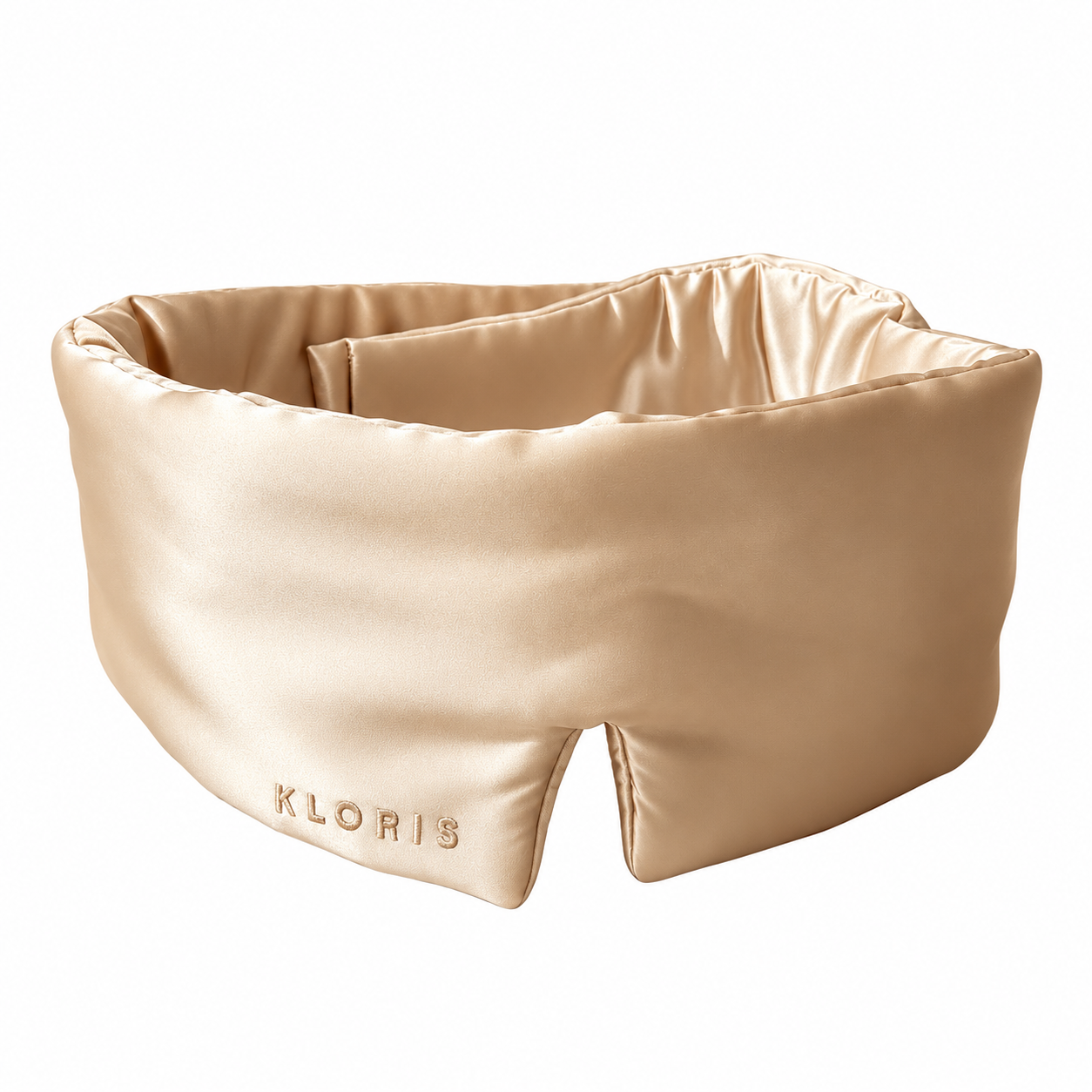
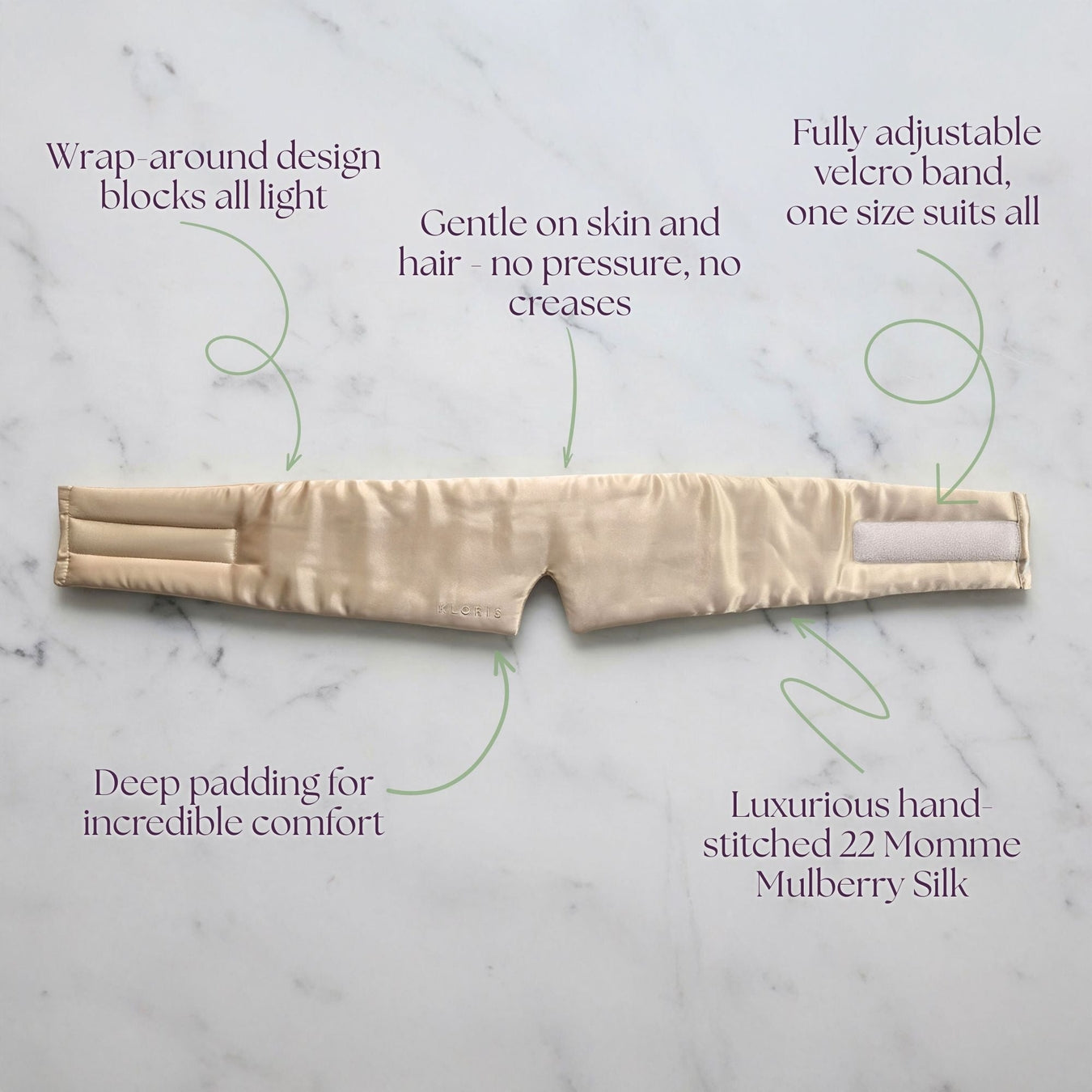
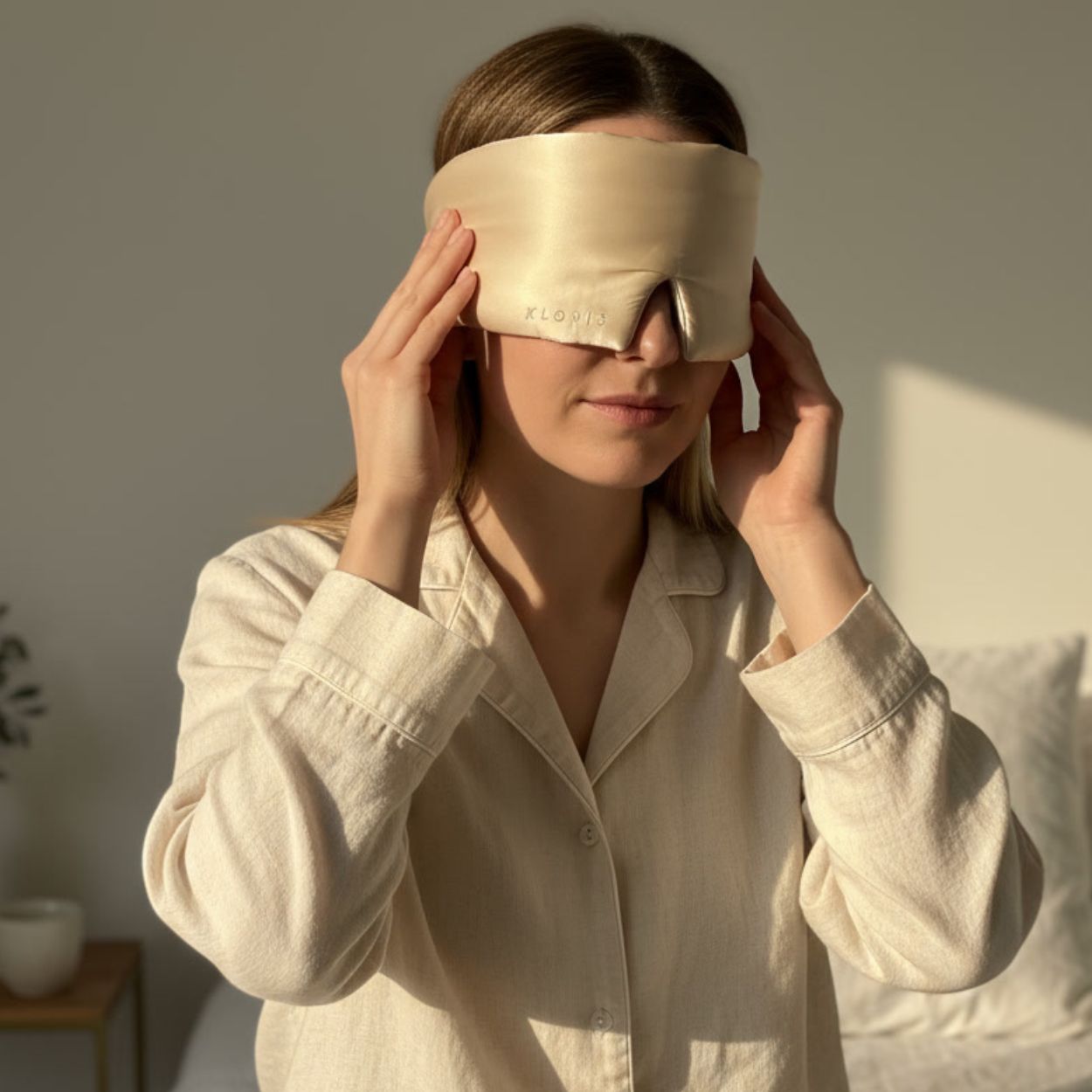
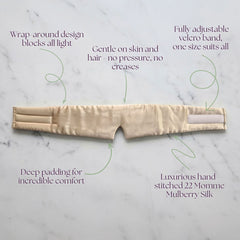
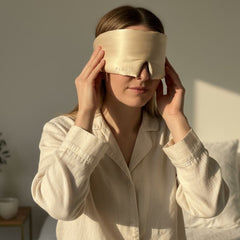
Crafted from luxurious 22 Momme mulberry silk with a soft bamboo-blend backing, this premium Sleep Mask combines exceptional comfort with intelligent light-blocking design. Unlike conventional eye masks that press against the eyelids, slip during sleep or allow light to enter around the nose, its wrap-around construction is designed to provide complete blackout without uncomfortable pressure points. The adjustable strap creates a secure, personalised fit while keeping the smooth silk away from the eyelashes and reducing unnecessary friction against facial skin and hair. Naturally gentle and beautifully soft, the substantial silk construction delivers a refined sleeping experience whether used at home, during travel or as part of a dedicated evening recovery routine. Hand-crafted for lasting quality, this is more than a luxury sleep accessory. It is a practical investment in the darkness, comfort and consistency that healthy sleep depends upon.
Q: Why should I invest in this Sleep Mask?
A: Sleep is one of the most powerful foundations of human health, influencing everything from brain function, memory and hormonal balance to immune resilience, cellular repair, metabolism and healthy ageing. Yet even small amounts of artificial light can interfere with natural melatonin signalling and disrupt the body's biological clock. This luxury 22 Momme Mulberry Silk Sleep Mask is designed to create complete darkness, helping protect your circadian rhythm and support the conditions needed for deep, restorative sleep. Unlike conventional masks that leak light, press against the eyes or slip during the night, its intelligent wrap-around design combines exceptional blackout coverage with pressure-free comfort, gentle silk and a breathable bamboo-blend backing. No electronics, no complicated routines, just a simple way to improve your sleeping environment every night. You spend approximately one-third of your life sleeping. Investing in the quality of those hours is an investment in the health, energy and resilience of your waking life.
Q: Why is sleeping in complete darkness so important for melatonin production and circadian health?
A: Melatonin is produced primarily by the pineal gland in response to signals from the brain's internal circadian clock. Darkness allows melatonin levels to rise naturally during the biological night, helping coordinate sleep timing, body temperature and numerous physiological rhythms. Even relatively low levels of artificial light can suppress melatonin under certain conditions, particularly when the light contains shorter blue wavelengths. A 100% blackout Sleep Mask helps prevent environmental light from reaching the eyes, supporting the body's natural nighttime signalling and creating more favourable conditions for restorative sleep.
Q: Can small amounts of light entering the bedroom disrupt sleep without waking you up?
A: Yes. Light can influence circadian signalling and physiological responses even when someone does not consciously wake up. The retina contains specialised intrinsically photosensitive retinal ganglion cells that respond to environmental illumination and communicate with the brain's central biological clock. Depending on intensity, wavelength and timing, nighttime light exposure may alter melatonin secretion and sleep physiology. Research suggests that certain light exposures during sleep can also influence autonomic and metabolic responses. Blocking unwanted light is therefore valuable even for people who believe they sleep comfortably in a partially illuminated room.
Q: How does melatonin influence cellular ageing, oxidative stress and mitochondrial health?
A: Melatonin is best known for regulating circadian timing, but it also demonstrates antioxidant and cell-protective activity in laboratory research. Scientists have investigated its interactions with mitochondrial function, oxidative stress signalling and endogenous antioxidant systems. These mechanisms are relevant to the biological processes involved in ageing. However, it has not been established that increasing natural melatonin through a blackout mask directly slows biological ageing or improves mitochondrial performance in humans. Protecting normal nighttime melatonin signalling remains a sensible component of maintaining healthy circadian biology.
Q: What is the relationship between darkness, deep sleep and the brain's glymphatic clearance system?
A: The glymphatic system is a proposed brain-wide fluid transport and waste-clearance pathway that has attracted considerable interest in sleep and neurological ageing research. Animal studies suggest that sleep may facilitate the movement and clearance of certain metabolic waste products, including proteins associated with neurodegenerative disease. Human research is developing, but the exact mechanisms and clinical implications remain under investigation. Darkness helps regulate the circadian conditions that favour sleep, while adequate sleep itself supports normal brain function. A blackout Sleep Mask can help maintain a dark sleeping environment, although it has not been shown to directly increase glymphatic clearance.
Q: Can sleeping in darkness influence cortisol, stress hormones and the body's recovery cycle?
A: Cortisol follows a strong circadian rhythm, typically rising toward morning and declining throughout the day. Light exposure is one of the environmental signals that helps coordinate this rhythm through the brain's central biological clock. Excessive or mistimed light exposure can contribute to circadian disruption, particularly when combined with irregular sleep schedules. A dark sleeping environment helps maintain the distinction between biological day and night, supporting normal circadian organisation. However, a Sleep Mask should not be considered a direct cortisol-lowering treatment.
Q: How does nighttime light exposure influence insulin sensitivity and metabolic health?
A: The circadian system helps coordinate glucose metabolism, insulin signalling and energy regulation. Controlled laboratory studies have found that certain nighttime light exposures can influence physiological responses associated with glucose regulation and autonomic nervous system activity. Chronic circadian disruption is also associated with increased metabolic health risks. These findings suggest that protecting darkness during sleep may be relevant to long-term metabolic health, although clinical trials have not established that wearing a blackout Sleep Mask independently improves insulin sensitivity or prevents metabolic disease.
Q: Why is darkness important for growth hormone release and physical recovery during sleep?
A: Growth hormone secretion is closely associated with sleep, particularly the first major period of slow-wave sleep after sleep onset. Growth hormone contributes to tissue maintenance, protein metabolism and normal physiological recovery. Darkness helps coordinate the circadian environment in which sleep occurs, while consistent sleep timing and sufficient sleep duration support normal sleep architecture. Wearing a blackout Sleep Mask may help reduce unwanted light disturbance, but it has not been demonstrated to directly increase growth hormone concentrations or accelerate muscle recovery.
Q: Does melatonin help regulate immune function as well as the sleep-wake cycle?
A: Melatonin interacts with biological pathways involved in immune signalling, inflammation and antioxidant defence. Circadian rhythms also influence the timing and activity of various immune processes, while sufficient sleep is important for maintaining normal immune function. Research continues to investigate how melatonin and circadian regulation interact with immune cells and inflammatory mediators. Maintaining darkness at night helps preserve normal melatonin timing, but it should not be interpreted as evidence that a Sleep Mask directly boosts immunity.
Q: Can a blackout Sleep Mask improve REM sleep, memory consolidation and emotional resilience?
A: REM sleep plays an important role in aspects of memory processing, learning and emotional regulation, while non-REM sleep contributes to other forms of memory consolidation and physical restoration. Environmental light can disturb sleep or influence circadian timing, potentially affecting overall sleep continuity. A comfortable blackout Sleep Mask may help some individuals sleep more consistently by removing visual disturbances. However, evidence that blackout masks reliably increase REM sleep duration is limited. Their principal advantage is creating a more stable, dark environment in which normal sleep processes can occur.
Q: Why does blue light have such a strong influence on melatonin suppression?
A: The retina contains melanopsin-sensitive cells that are particularly responsive to short-wavelength light, including blue-enriched light. These cells transmit information about environmental illumination to the brain's suprachiasmatic nucleus, which helps regulate melatonin timing and circadian rhythms. Evening exposure to bright, blue-enriched light can delay the body's biological night and suppress melatonin. Reducing bright light and screen exposure before bed, then maintaining darkness during sleep, helps reinforce the natural transition from daytime alertness to nighttime rest.
Q: Is complete darkness more beneficial than sleeping with dim lighting or a nightlight?
A: A dark bedroom generally provides more favourable conditions for normal nighttime melatonin signalling than a continuously illuminated environment. The biological impact of light depends on brightness, colour, duration, timing and individual sensitivity. Dim, warm-coloured lighting typically has less circadian impact than bright, blue-enriched lighting, but it is not necessarily biologically neutral. A blackout Sleep Mask offers a practical way to reduce direct light exposure without requiring every source of ambient illumination to be eliminated.
Q: Can sleeping in complete darkness help people who wake too early because of morning sunlight?
A: Morning light is a powerful signal that helps shift the circadian clock toward wakefulness. This is beneficial when it arrives at the desired waking time, but early sunlight entering a bedroom may contribute to premature waking in light-sensitive sleepers. A blackout Sleep Mask blocks unwanted morning light, potentially helping maintain sleep until the intended wake-up time. Removing the mask and obtaining natural daylight after waking can then reinforce a consistent circadian schedule.
Q: Why is a wrap-around blackout Sleep Mask more effective than a conventional eye mask?
A: Conventional sleep masks may allow light to enter around the nose, cheeks and outer edges, particularly when the wearer changes position during the night. A wrap-around design provides broader coverage and helps minimise these gaps. The luxury 22 Momme Mulberry Silk construction combines substantial fabric with a soft, smooth surface, while the adjustable strap allows a personalised fit without excessive pressure. This makes the design particularly useful for people who are sensitive to light but find traditional eye masks uncomfortable or restrictive.
Q: How does Magnesium support sleep quality, nervous system relaxation and nighttime recovery?
A: Magnesium is an essential mineral involved in hundreds of enzyme-dependent reactions, including processes associated with nerve signalling, muscle function and cellular energy metabolism. It contributes to normal nervous system function and interacts with pathways involved in neuronal excitability. Low Magnesium status may contribute to symptoms that interfere with comfortable sleep, while supplementation has shown possible sleep benefits in some studies, particularly among people with inadequate intake. However, evidence that Magnesium consistently improves sleep in otherwise healthy adults remains mixed. Combining adequate Magnesium nutrition with a dark, comfortable sleeping environment addresses two different aspects of sleep health: physiological nutritional support and circadian light regulation.
Q: Is taking Magnesium before bed more effective when combined with a blackout Sleep Mask?
A: Magnesium and darkness influence sleep through different biological mechanisms. Magnesium supports normal neuromuscular and cellular function, while darkness helps coordinate melatonin secretion and circadian timing. There is a plausible rationale for combining good Magnesium nutrition with effective light control as part of a broader sleep routine. However, clinical research has not established a specific synergistic effect between Magnesium supplementation and wearing a blackout Sleep Mask. Consistent sleep timing, reduced evening light exposure and sufficient dietary Magnesium are more important than assuming the combination produces an amplified effect.
Q: What is the ideal 60-minute evening routine for natural melatonin production and deeper sleep?
A: Begin approximately one hour before bedtime by reducing bright overhead lighting and switching electronic devices to lower brightness or setting them aside. Keep the bedroom comfortably cool, minimise noise and avoid stimulating activities that delay relaxation. Gentle stretching, reading or a warm shower can help establish a predictable transition toward sleep. At bedtime, put on a comfortable blackout Sleep Mask to eliminate unwanted light exposure. Repeating this routine at a consistent time helps reinforce behavioural and environmental signals associated with sleep, while the body's internal clock responds primarily to regular timing and appropriate light exposure.
Q: What is the most effective morning routine for maintaining a healthy circadian rhythm after sleeping in darkness?
A: The ideal circadian routine combines darkness during the biological night with sufficient natural light after waking. Remove the Sleep Mask at your intended wake-up time and expose your eyes to outdoor daylight, ideally within the first hour. Morning light helps synchronise the suprachiasmatic nucleus and reinforces the timing of alertness, body temperature and subsequent melatonin release. Maintaining a consistent waking time and incorporating morning movement can further support regular sleep-wake patterns. The goal is not to avoid light altogether, but to experience light and darkness at biologically appropriate times.
Q: Can a blackout Sleep Mask support better sleep during travel, jet lag and changing time zones?
A: Travel frequently exposes the body to unfamiliar lighting, irregular schedules and disrupted sleep environments. Hotel corridor lights, aircraft cabin lighting and early sunrise can interfere with rest when sleep is needed. A blackout Sleep Mask provides portable control over visual light exposure, making it easier to create darkness in unfamiliar surroundings. For jet lag, however, appropriately timed daylight exposure remains essential for adjusting the circadian clock to a new time zone. The mask is most useful for protecting planned sleep periods rather than independently correcting circadian misalignment.
Q: Why is a blackout Sleep Mask particularly valuable for shift workers and daytime sleepers?
A: Shift workers often need to sleep when environmental light levels are high and the body's circadian system is promoting wakefulness. Daytime light can make sleep initiation and maintenance more difficult, particularly in bedrooms without effective blackout curtains. A well-fitting Sleep Mask can help create darkness during the intended sleep period and reduce visual disturbances. It cannot fully overcome the biological challenges of shift work, but it offers a practical environmental tool alongside consistent scheduling, noise control and carefully timed light exposure.
Q: Can 22 Momme Mulberry Silk help protect delicate facial skin and hair during sleep?
A: Mulberry Silk has a smooth fibre surface that creates relatively low friction against skin and hair compared with many rougher textiles. This may help minimise mechanical tugging, temporary sleep creases and friction-related hair disturbance. The 22 Momme weight provides a substantial, luxurious fabric suitable for a premium sleep accessory. Although silk is often described as skin-friendly, it has not been proven that wearing a silk Sleep Mask prevents wrinkles or slows skin ageing. Its clearest benefits are softness, comfort and reduced mechanical friction.
Q: Why is a pressure-free Sleep Mask important for eye comfort and uninterrupted sleep?
A: Excessive pressure around the eyes can create discomfort, interfere with natural eyelid movement or make a sleep mask difficult to tolerate throughout the night. A well-designed mask should block light while avoiding unnecessary compression of the eyelids and surrounding tissues. The wrap-around Silk & Bamboo Sleep Mask uses an adjustable strap and coverage designed to minimise direct pressure on the eyes and eyelashes. Comfortable fit is especially important for people who change sleeping positions frequently or wear a mask for extended periods.
Q: Can wearing a blackout Sleep Mask every night help establish a stronger sleep routine?
A: Repeated bedtime behaviours can become learned cues associated with relaxation and sleep. Putting on a comfortable Sleep Mask at the same point each evening may help establish a consistent transition between waking activities and the intended sleep period. The mask also reduces variation in nighttime light exposure caused by seasonal sunrise changes, street lighting and unfamiliar environments. Its greatest long-term value comes from consistent use alongside regular sleep and waking times, rather than from expecting immediate physiological changes after a single night.
Q: Is sleeping in complete darkness more important than taking melatonin supplements?
A: Darkness and melatonin supplements serve different purposes. Darkness supports the body's natural circadian regulation of melatonin secretion, while supplemental melatonin introduces an external hormone signal that can be useful in selected circumstances, such as certain circadian rhythm disorders or jet lag. For people whose main problem is unwanted bedroom light, removing that exposure is a logical first step. A blackout Sleep Mask helps address the environmental cause without introducing additional melatonin, although it cannot replace treatments that may be appropriate for diagnosed sleep disorders.
Q: Can sleeping in darkness contribute to cardiovascular health and healthy blood pressure regulation?
A: Sleep and circadian rhythms influence autonomic nervous system activity, cardiovascular regulation and the normal overnight pattern of blood pressure. Some observational and experimental studies suggest that nighttime light exposure may be associated with unfavourable cardiovascular or metabolic responses. Maintaining a dark sleep environment is therefore consistent with good sleep hygiene and circadian health. However, there is not sufficient evidence that wearing a blackout Sleep Mask independently lowers blood pressure or prevents cardiovascular disease.
Q: Why is protecting sleep quality considered a foundational strategy for healthy ageing and longevity?
A: Consistent, sufficient sleep supports cognitive performance, immune regulation, metabolic function, cardiovascular health and normal tissue maintenance. Chronic sleep disruption is associated with a wide range of adverse health outcomes, making sleep an important target for preventative health strategies. Darkness helps maintain the environmental signals that coordinate the body's sleep-wake cycle, while a comfortable blackout Sleep Mask offers a simple way to reduce unwanted nighttime light exposure. Rather than promising to reverse ageing, the most credible benefit is supporting one of the essential biological conditions upon which long-term health depends.
WARNING: Never machine wash
Thanks for subscribing!
This email has been registered!