Currency
Currency


Couldn't load pickup availability
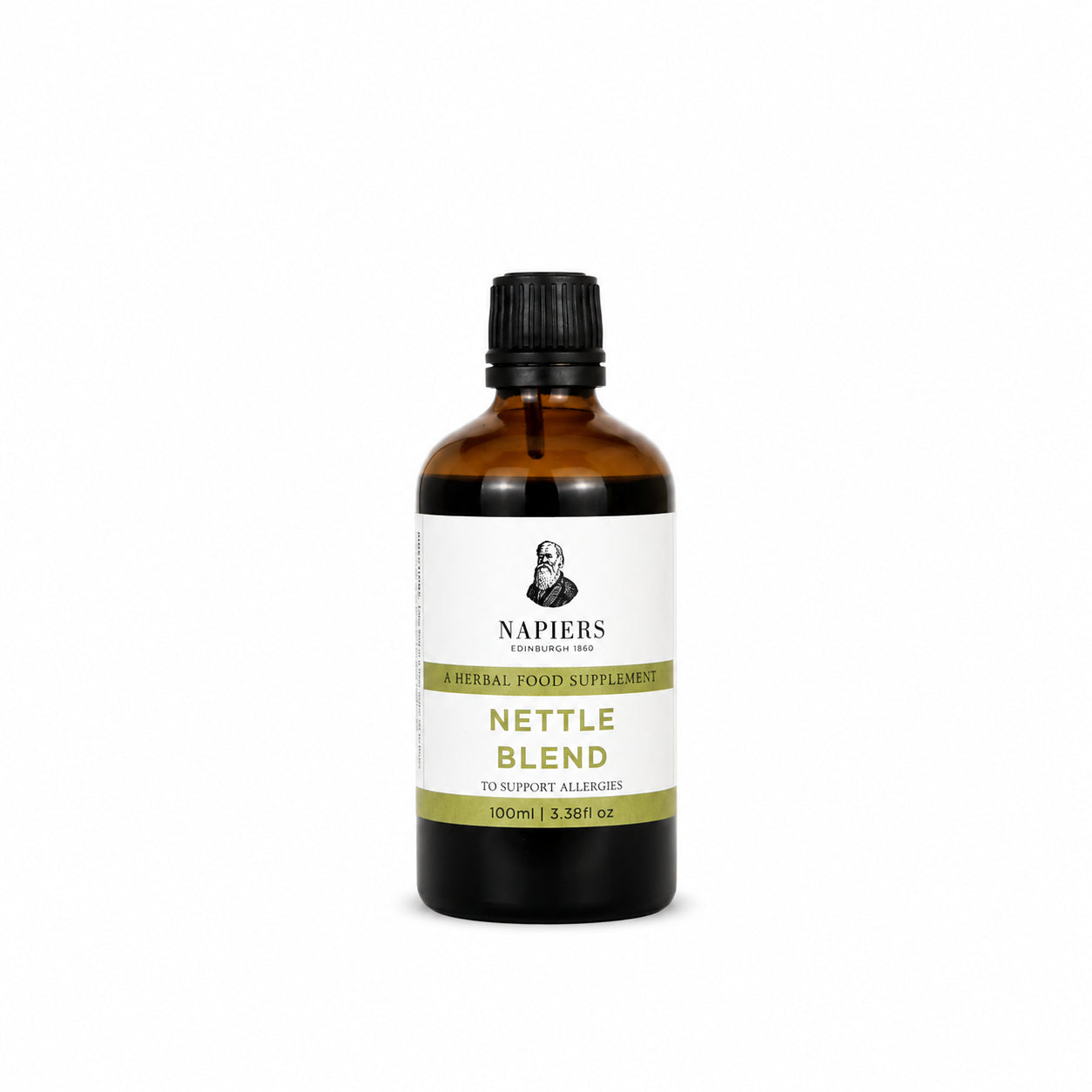
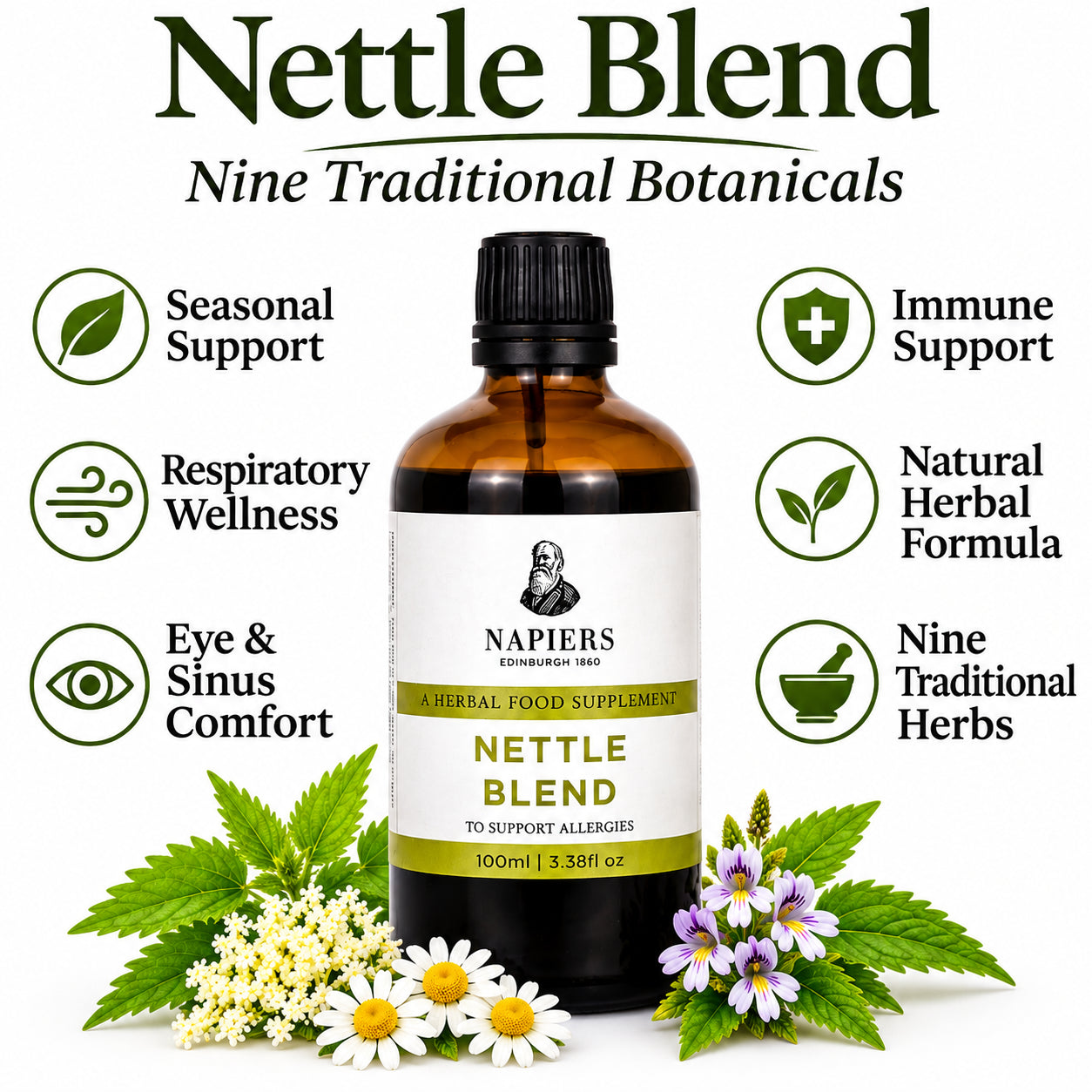
Nettle Blend – Stinging Nettle, Eyebright, Elderflower & 9 Traditional Herbs | Seasonal & Respiratory Healths – 100ml
As the seasons change and pollen levels rise, many people turn towards the remarkable diversity of traditional European herbs. At the centre of Nettle Blend is Stinging Nettle (Urtica dioica), a plant that has been used for centuries in herbal preparations and continues to attract interest for its naturally occurring flavonoids, phenolic acids and other bioactive compounds. Nettle leaf has been studied for potential effects on inflammatory pathways and allergy-related responses, although clinical evidence for reliable hay fever relief remains limited. Alongside Nettle sits Eyebright (Euphrasia officinalis), a botanical whose very name reflects its longstanding association with eye-related herbal traditions. Elderflower (Sambucus nigra) completes this particularly interesting trio, bringing its distinctive aromatic and phenolic plant compounds into the blend. These three herbs have historically appeared in seasonal herbal preparations, especially those associated with the nose, eyes and upper respiratory system. Together, they provide a compelling botanical foundation for customers who appreciate traditional herbalism, complex plant chemistry and the heritage of carefully formulated liquid extracts.
Nettle Blend goes considerably further than a simple nettle tincture by incorporating several traditional herbs with complementary histories of use. German Chamomile (Matricaria recutita) is particularly well known for its naturally occurring apigenin compounds and longstanding use in soothing herbal preparations. Ribwort Plantain (Plantago lanceolata) contains mucilage and iridoid glycosides, including aucubin, and has traditionally been used in preparations associated with throat and respiratory comfort. Grindelia (Grindelia robusta), commonly called Gumweed, is a resinous plant that has historically featured in Western herbal medicine, particularly in respiratory-focused formulations. Each botanical contributes a different collection of naturally occurring plant constituents, giving the finished tincture a broad phytochemical profile. The combination reflects a traditional whole-herb approach in which several plants are brought together rather than relying on one isolated compound. For botanical enthusiasts, the inclusion of these less commonly encountered herbs is a particularly appealing feature, distinguishing Nettle Blend from ordinary single-ingredient nettle supplements.
The final three botanicals add further depth to this sophisticated herbal preparation. Golden Rod (Solidago virgaurea) is a traditional European herb containing flavonoids and phenolic compounds, historically associated with urinary and fluid-balance preparations. Ground Ivy (Glechoma hederacea), despite its name, belongs to the mint family rather than the true ivies and has a longstanding place in traditional seasonal and respiratory herbalism. Fumitory (Fumaria officinalis)introduces a different botanical character, containing naturally occurring alkaloids and other plant constituents historically associated with digestive and skin-focused herbal preparations. These ingredients complete a carefully selected nine-herb combination extracted into an alcohol-and-water base, creating a practical liquid supplement for those who prefer traditional tinctures over capsules or teas. Presented in a 100ml amber glass bottle with a convenient dropper lid, Nettle Blend embodies the heritage of Scottish herbal medicine and the enduring appeal of botanical diversity. For customers seeking a distinctive traditional formula featuring Stinging Nettle, Eyebright, Elderflower and six additional herbs, this is an intriguing addition to a considered herbal wellness collection.
Q: What makes Nettle Blend different from an ordinary Stinging Nettle tincture?
A: Unlike a single-herb Nettle extract, this formula combines nine traditional botanicals, including Eyebright, Elderflower, German Chamomile, Ribwort Plantain and Grindelia. Each herb contributes its own naturally occurring plant compounds, creating a more complex traditional herbal preparation.
Q: Why is Nettle Blend particularly interesting during hay fever season?
A: Stinging Nettle, Eyebright and Elderflower have longstanding associations with seasonal herbal preparations. Nettle has also attracted scientific interest for its potential influence on inflammatory and histamine-related pathways. However, the finished blend has not been established as an effective treatment for hay fever.
Q: Does Stinging Nettle act as a natural antihistamine?
A: Laboratory research has investigated compounds in Stinging Nettle for their effects on histamine-related processes and inflammatory signalling. These findings make Nettle interesting to botanical researchers, although they do not establish that a nettle tincture works like a conventional antihistamine in people.
Q: What are the traditional benefits of Eyebright?
A: Eyebright has been associated with eye and upper respiratory herbal preparations for centuries. It contains naturally occurring plant compounds, including iridoids and flavonoids. In Nettle Blend, it is taken orally as part of the herbal tincture and should never be applied directly to the eyes.
Q: Why does Nettle Blend contain German Chamomile?
A: German Chamomile is one of Europe's best-known traditional herbs. Its flowers contain naturally occurring compounds such as apigenin derivatives and other flavonoids. It has traditionally been valued for soothing herbal preparations and complements the formula's seasonal botanical profile.
Q: What makes Ribwort Plantain particularly interesting for respiratory wellness?
A: Ribwort Plantain contains naturally occurring mucilage, aucubin and other botanical compounds. It has a long history in European herbalism, especially in preparations traditionally associated with the throat and upper respiratory tract.
Q: What is Grindelia and why is it included?
A: Grindelia, also known as Gumweed, is a resinous botanical with a history of use in Western herbal medicine. It has traditionally featured in respiratory preparations and contains distinctive plant resins and other naturally occurring constituents.
Q: Why is Elderflower commonly associated with seasonal herbal preparations?
A: Elderflower has been used in European herbal traditions for generations, particularly in teas and preparations associated with the changing seasons. Its flowers contain flavonoids and aromatic plant compounds that contribute to its distinctive botanical character.
Q: Is Ground Ivy the same as ordinary garden ivy?
A: No. Ground Ivy belongs to the mint family and is botanically different from Common Ivy. It is an aromatic herb traditionally used in European herbal preparations, particularly those associated with seasonal respiratory wellness.
Q: What are the benefits of Golden Rod?
A: Golden Rod contains flavonoids and other phenolic compounds. It has traditionally been used in herbal preparations associated with urinary function and fluid balance, bringing another botanical dimension to this nine-herb blend.
Q: Why does the formula contain Fumitory?
A: Fumitory is a traditional European herb containing naturally occurring alkaloids and other plant compounds. It has historically appeared in herbal preparations associated with digestive and skin wellness, contributing to the diversity of the formula.
Q: Can Nettle Blend support sinus and nasal comfort?
A: Several ingredients have histories of use in herbal preparations associated with the upper respiratory tract. Napiers markets the blend for allergy support, although clinical studies have not established that the finished product reliably relieves sinus congestion or nasal allergy symptoms.
Q: Is Nettle Blend suitable for people interested in biohacking and plant polyphenols?
A: Its nine botanical ingredients provide a diverse range of naturally occurring phytochemicals, including flavonoids, phenolic compounds, iridoids and plant alkaloids. It is an interesting traditional herbal formula for those exploring botanical diversity, although the individual compounds are not standardised or quantified.
Q: Does Nettle Blend contain alcohol?
A: Yes. The herbs are extracted using sugar beet ethanol and water. Alcohol is a traditional extraction solvent used to dissolve and preserve a range of botanical constituents.
Q: Is Nettle Blend the same as Nettle Leaf Tea?
A: No. Nettle Leaf Tea is an infusion prepared from dried nettle leaves, whereas Nettle Blend combines nine botanical extracts in an alcohol-based liquid tincture. The ingredients, extraction methods and concentrations are different.
Q: Can Nettle Blend be used throughout the year?
A: It is not restricted to a particular season, although its traditional botanical profile makes it especially relevant to seasonal herbal routines. The manufacturer recommends taking it under the guidance of a medical herbalist or healthcare practitioner.
Q: How should Nettle Blend be taken?
A: Shake the bottle well before use. Dilute the number of drops recommended by your medical herbalist or healthcare practitioner in a small amount of water or juice and consume immediately. The manufacturer does not publish a universal dosage for this blend.
Q: Can Nettle Blend be taken alongside antihistamines?
A: The combination should be checked with a pharmacist or healthcare practitioner, particularly if taking regular medication. Nettle Blend should not be used as a substitute for prescribed allergy treatment.
Q: Is Nettle Blend suitable during pregnancy or breastfeeding?
A: Its combination of multiple medicinal herbs and alcohol makes professional advice important during pregnancy or breastfeeding. The formula should not be assumed suitable without individual assessment.
Q: Is Nettle Blend suitable for children?
A: The product contains alcohol and multiple herbal extracts. Its suitability for children should be determined by a qualified healthcare practitioner rather than using an adult dose.
Q: What size is Nettle Blend and how is it packaged?
A: The standard retail bottle contains 100ml (3.38 US fl. oz.) of liquid herbal tincture, supplied in recyclable glass with a dropper lid. Larger 500ml and 1-litre options are also listed by the manufacturer.
Q: What makes Nettle Blend an appealing choice for traditional herbal enthusiasts?
A: Its carefully selected combination of nine herbs, including several less commonly found botanicals such as Grindelia, Ground Ivy and Fumitory, makes it an intriguing example of traditional Scottish herbal formulation. It offers botanical diversity in a convenient liquid extract rather than relying on a single plant.
Other ingredients: Sugar Beet Alcohol, Water.
For best results, use consistently during seasonal changes or periods of increased pollen exposure, following the dosage recommended by a qualified medical herbalist or healthcare practitioner. This is a concentrated, alcohol-based herbal tincture.
Thanks for subscribing!
This email has been registered!