Currency
Currency


Couldn't load pickup availability
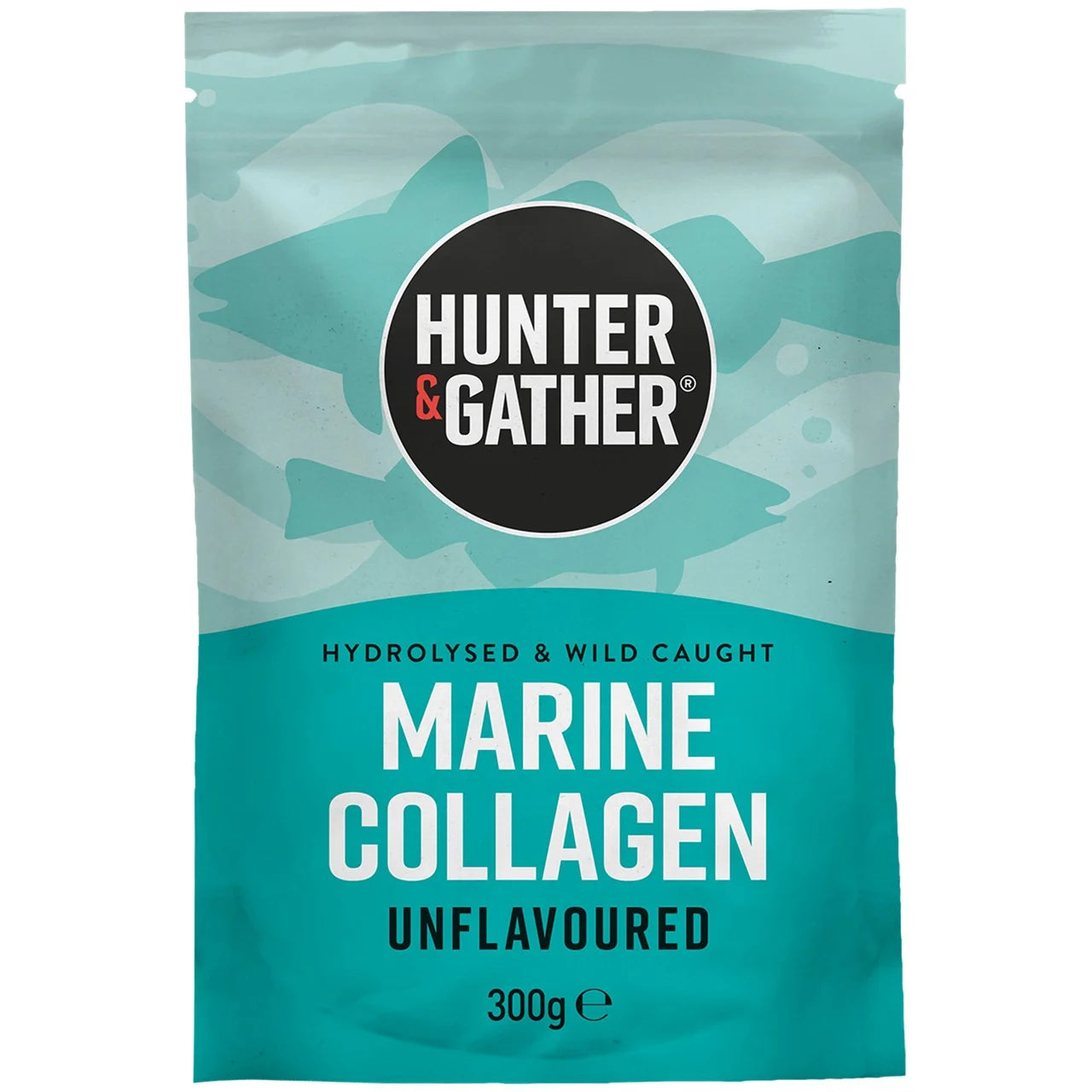
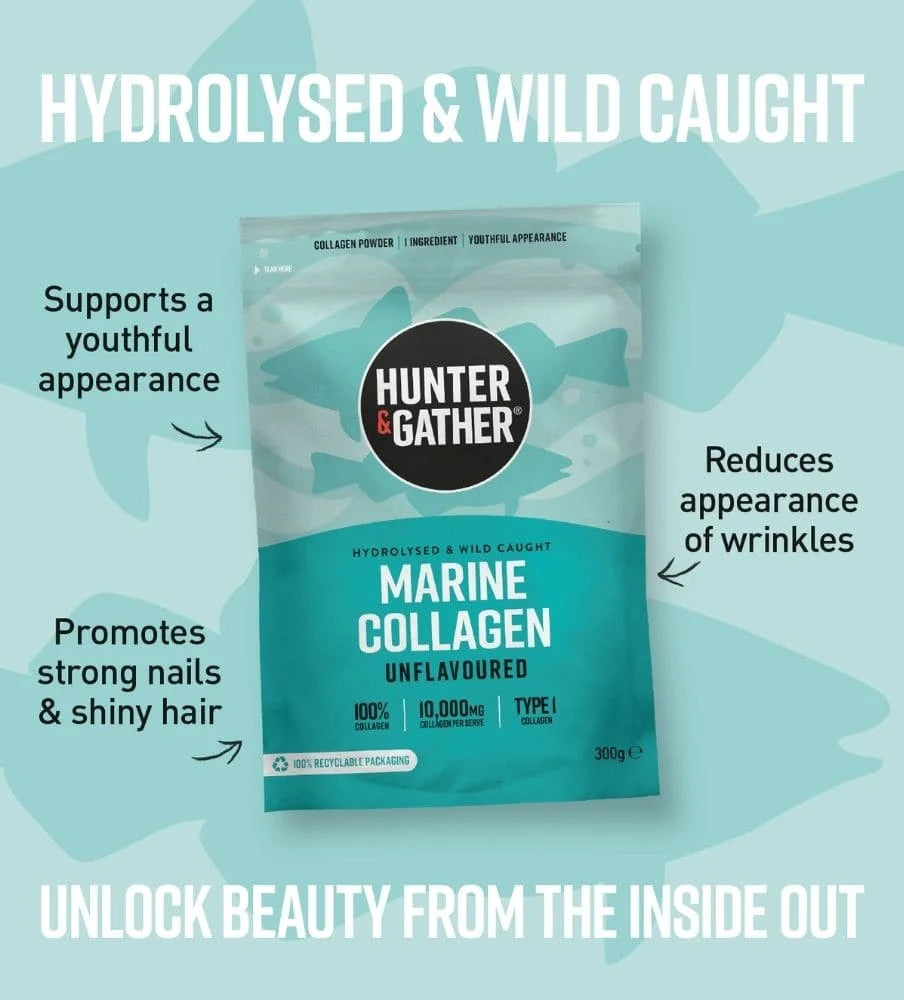
Type 1 Marine Collagen Wild-Caught | Skin Elasticity, Healthy Ageing, Bones, Hair & Connective Tissue | Norway
Collagen is the most abundant protein in the human body, forming the structural framework that gives skin its firmness, bones their resilience and connective tissues their strength. Type 1 Collagen is especially important, accounting for approximately 90% of the body's total collagen and providing essential support to the skin, bones, tendons, ligaments and other connective tissues. From early adulthood, natural collagen production gradually declines, while environmental factors such as ultraviolet exposure, oxidative stress and glycation can accelerate the deterioration of existing collagen fibres. Over time, this contributes to reduced skin elasticity, fine lines, wrinkles and changes in tissue strength. This Wild-Caught Norwegian Marine Collagen provides the amino acid building blocks needed for collagen synthesis, supporting the body's ability to maintain its structural integrity as it ages.
Marine Collagen is particularly valued for its high concentration of Type 1 Collagen and its distinctive amino acid profile, including Glycine, Proline and Hydroxyproline. These compounds are fundamental to the formation and stability of collagen's triple-helix structure, which provides strength and flexibility throughout the body's connective tissue network. Hydrolysed Collagen peptides are digested and absorbed as amino acids and small peptides, some of which may participate in biological signalling associated with collagen metabolism. Human studies suggest that certain Collagen peptide supplements may improve skin hydration and elasticity, although results depend on formulation, dosage and study quality. Research is also investigating their potential contribution to joint comfort, bone metabolism and connective tissue recovery. For those interested in longevity, skin health and maintaining physical resilience, Marine Collagen offers a targeted nutritional approach to supporting the structural proteins that underpin healthy ageing.
This Type 1 Marine Collagen is sourced from wild-caught fish in Norwegian waters, offering a marine-derived alternative to bovine and porcine Collagen. The hydrolysis process produces smaller Collagen peptides while preserving the characteristic amino acid profile that makes this protein valuable for connective tissue nutrition. Unlike products marketed around superficial beauty promises, this is foundational structural nourishment, supporting the body's natural processes from within. Ideal for those looking to maintain healthy skin, strong connective tissues and long-term physical vitality through intelligent daily nutrition. Premium Norwegian Marine Collagen, delivering the building blocks of strength, resilience and healthy ageing.
Q: How does Type 1 Marine Collagen influence fibroblast activity and the body's natural collagen production?
A: Fibroblasts are specialised cells responsible for producing collagen, elastin and other components of the extracellular matrix that give skin its structure and resilience. Hydrolysed Marine Collagen provides Glycine, Proline and Hydroxyproline, alongside small collagen-derived peptides that may influence fibroblast signalling. Laboratory studies suggest certain peptides can stimulate pathways associated with collagen synthesis and extracellular matrix maintenance. Human trials have also reported improvements in skin hydration and elasticity, although the precise contribution of fibroblast stimulation remains under investigation.
Q: Why is Type 1 Collagen particularly important for skin ageing and connective tissue integrity?
A: Type 1 Collagen is the dominant structural collagen in human skin, tendons, ligaments and bones, providing tensile strength and resistance to mechanical stress. Its fibres form a dense extracellular network that helps maintain skin firmness and connective tissue resilience. With ageing, collagen production and organisation change while existing fibres accumulate damage from ultraviolet radiation, oxidative stress and glycation. Supplying collagen-derived amino acids supports the nutritional requirements of collagen synthesis, while clinical studies suggest some hydrolysed collagen formulations may improve measurable aspects of skin ageing.
Q: What makes Marine Collagen peptides different from bovine collagen at the molecular level?
A: Marine Collagen is typically rich in Type 1 Collagen, whereas bovine collagen supplements commonly contain both Type 1 and Type 3. Marine and bovine collagen also differ in amino acid composition, peptide sequences and structural characteristics. Once hydrolysed, their molecular weight distributions depend heavily on the manufacturing process rather than animal origin alone. Both can provide bioavailable collagen-derived peptides, but current human evidence does not establish that Marine Collagen is universally better absorbed or more effective than bovine collagen.
Q: How does Hydroxyproline contribute to collagen stability and tissue resilience?
A: Hydroxyproline is a characteristic amino acid derivative found in high concentrations within collagen. It plays an important role in stabilising the collagen triple helix through hydrogen bonding and other structural interactions. The body produces Hydroxyproline during collagen formation through vitamin C-dependent enzymatic reactions. Dietary collagen also supplies Hydroxyproline-containing peptides, some of which can be detected in circulation following supplementation. These peptides are being investigated for their potential involvement in connective tissue signalling and repair.
Q: Can Marine Collagen help counteract collagen glycation and the formation of advanced glycation end products?
A: Glycation occurs when sugars react with proteins, potentially forming advanced glycation end products, or AGEs. In collagen-rich tissues, accumulated AGEs can create additional cross-links between collagen fibres, increasing stiffness and reducing elasticity. This process contributes to age-related changes in skin and connective tissues. Although maintaining healthy glucose metabolism may help limit excessive glycation, there is currently insufficient human evidence that Marine Collagen supplementation directly prevents AGE formation or reverses existing collagen cross-links.
Q: What is the relationship between Marine Collagen, matrix metalloproteinases and skin ageing?
A: Matrix metalloproteinases, commonly called MMPs, are enzymes involved in breaking down and remodelling extracellular matrix proteins, including collagen. Their activity is essential for normal tissue maintenance, but excessive activity associated with ultraviolet exposure and inflammation can contribute to collagen degradation. Experimental research suggests some collagen-derived peptides may influence pathways associated with MMP activity and extracellular matrix turnover. Whether oral Marine Collagen meaningfully regulates these enzymes in human skin remains an active area of investigation.
Q: How does Marine Collagen interact with vitamin C during collagen synthesis?
A: Vitamin C is an essential cofactor for the enzymes prolyl hydroxylase and lysyl hydroxylase, which modify collagen during its formation. These reactions are necessary for producing stable collagen structures. Marine Collagen provides amino acids such as Glycine and Proline, while vitamin C supports the enzymatic processes required to assemble functional collagen. Adequate vitamin C status is therefore important for normal collagen formation, although taking additional vitamin C beyond nutritional requirements has not been shown to consistently amplify the benefits of collagen supplementation.
Q: Can Marine Collagen support bone mineral density and the structural quality of bone?
A: Bone is not simply a mineral structure. Approximately 90% of its organic matrix consists of Type 1 Collagen, which provides the flexible framework upon which calcium phosphate minerals are deposited. This collagen network contributes to bone toughness and resistance to fracture. Some clinical research involving specific collagen peptide preparations has reported improvements in bone mineral density markers or measurements, particularly in postmenopausal women. However, these findings cannot automatically be generalised to every Marine Collagen product, and evidence for fracture prevention remains insufficient.
Q: How might Marine Collagen influence tendon and ligament adaptation to resistance training?
A: Tendons and ligaments rely heavily on Type 1 Collagen to withstand mechanical loading and transmit force. Exercise provides the mechanical stimulus that drives connective tissue adaptation, while adequate protein and amino acid availability supports tissue protein synthesis. Preliminary research suggests collagen or gelatin supplementation combined with exercise may influence collagen synthesis markers and certain tendon properties. The optimal dose, timing and clinical benefits remain uncertain, but the combination of progressive loading and appropriate nutrition is scientifically more plausible than supplementation alone.
Q: Does Marine Collagen provide specific benefits for hair follicles and hair structure?
A: Hair fibres are composed primarily of keratin rather than collagen. However, the hair follicle is surrounded by a connective tissue environment containing collagen and other extracellular matrix proteins. Marine Collagen supplies amino acids that contribute to overall protein nutrition, including Glycine and Proline. While this may support general nutritional adequacy, direct evidence that oral Marine Collagen increases hair growth, density or thickness in otherwise healthy individuals is limited. Claims of dramatic hair regrowth are not supported by robust clinical evidence.
Q: Why is the molecular weight of Hydrolysed Marine Collagen important for bioavailability?
A: Native collagen is a large, complex protein that must undergo digestion before its components can be absorbed. Hydrolysis breaks collagen into smaller peptides, which can be further digested into amino acids and short peptide sequences. Certain dipeptides and tripeptides containing Hydroxyproline have been detected in human blood after collagen consumption. Molecular weight distribution can influence digestion and peptide availability, but a lower molecular weight does not automatically guarantee superior clinical results. Peptide composition, dosage and manufacturing quality are also important.
Q: Can Marine Collagen influence the extracellular matrix beyond the visible appearance of skin?
A: The extracellular matrix is a complex network of collagen, elastin, proteoglycans and other structural molecules that surrounds cells and influences tissue organisation, mechanical strength and cellular communication. Type 1 Collagen is particularly abundant in the dermis, tendons, ligaments and bone matrix. Collagen-derived amino acids contribute to the body's overall protein resources, while certain peptides are being investigated for biological signalling effects. This makes Marine Collagen relevant to broader connective tissue research, although proven benefits remain specific to the outcomes and formulations studied.
Q: How does Marine Collagen relate to the mTOR pathway and muscle protein synthesis?
A: The mTOR pathway helps regulate muscle protein synthesis in response to amino acids, resistance exercise and other nutritional signals. Unlike whey protein, Marine Collagen contains relatively little leucine and lacks tryptophan, making it an incomplete protein and a less effective standalone option for stimulating muscle growth. Its nutritional value lies primarily in its collagen-associated amino acid profile rather than its ability to maximise muscle protein synthesis. For people combining strength training with connective tissue support, Marine Collagen can complement rather than replace complete dietary proteins.
Q: What role does Glycine from Marine Collagen play in glutathione synthesis and metabolic health?
A: Glycine is one of three amino acids required to synthesise glutathione, alongside cysteine and glutamate. It also contributes to collagen production, creatine synthesis, haem formation and several metabolic pathways. Marine Collagen is naturally rich in Glycine, making it a useful dietary source of this amino acid. Research has explored Glycine availability in relation to oxidative stress and metabolic function, but it has not been established that Marine Collagen supplementation directly raises glutathione levels or produces the same outcomes as dedicated Glycine interventions.
Q: Can Marine Collagen support skin hydration independently of topical moisturisers and hyaluronic acid?
A: Skin hydration depends on several interacting factors, including the integrity of the skin barrier, extracellular matrix organisation and water-binding molecules such as hyaluronic acid. Collagen provides structural support within the dermis rather than acting as a topical moisture barrier. Several randomised trials of oral hydrolysed collagen have reported improvements in skin hydration after sustained supplementation, although the strength of the evidence varies. These effects are distinct from topical moisturisation and may reflect changes in dermal structure or associated biological processes.
Q: How does Marine Collagen fit into a longevity-focused strategy for preserving tissue quality?
A: Biological ageing involves progressive changes in extracellular matrix organisation, collagen turnover, tissue elasticity and the accumulation of molecular damage. Type 1 Collagen is central to the mechanical properties of skin, bones, tendons and ligaments. Marine Collagen provides characteristic amino acids and peptides that may support selected aspects of tissue maintenance. However, no clinical evidence demonstrates that supplementation slows biological ageing itself. Its most credible role is as part of a broader strategy involving sufficient protein, resistance exercise, vitamin C, healthy glucose regulation and protection against excessive ultraviolet exposure.
Q: Is Marine Collagen more effective when taken on an empty stomach or alongside meals?
A: Hydrolysed Collagen is digested and absorbed through normal gastrointestinal processes, whether consumed with food or separately. Some collagen-derived peptides appear in the bloodstream following ingestion, but there is no convincing clinical evidence that taking Marine Collagen on an empty stomach produces superior skin or connective tissue outcomes. Consistent daily intake is likely more important than precise timing. Taking it alongside a meal containing vitamin C-rich foods can also help support the nutritional requirements of normal collagen formation.
Q: How long does Marine Collagen take to produce measurable changes in skin elasticity and hydration?
A: Clinical trials investigating hydrolysed collagen commonly assess skin hydration, elasticity and wrinkle measurements after approximately 8 to 12 weeks of daily supplementation, although some studies report earlier changes. Collagen-rich tissues undergo continuous but relatively slow remodelling, so immediate structural changes should not be expected. Results depend on the specific collagen preparation, daily dose, baseline nutritional status, age and lifestyle. Evidence for improvements in deeper connective tissues such as tendons and bones generally requires longer observation periods.
Q: Why might wild-caught Norwegian Marine Collagen appeal to people prioritising ingredient provenance?
A: Wild-caught Norwegian fish provide a marine source of Type 1 Collagen with identifiable geographical provenance. For consumers who prioritise ingredient traceability, species origin and responsible raw material sourcing, these details can be meaningful quality considerations. However, wild-caught status and Norwegian origin do not independently establish superior purity, sustainability or nutritional effectiveness. Those qualities depend on verified sourcing practices, contaminant testing, processing standards and the composition of the finished collagen product.
Thanks for subscribing!
This email has been registered!