Currency
Currency


Couldn't load pickup availability
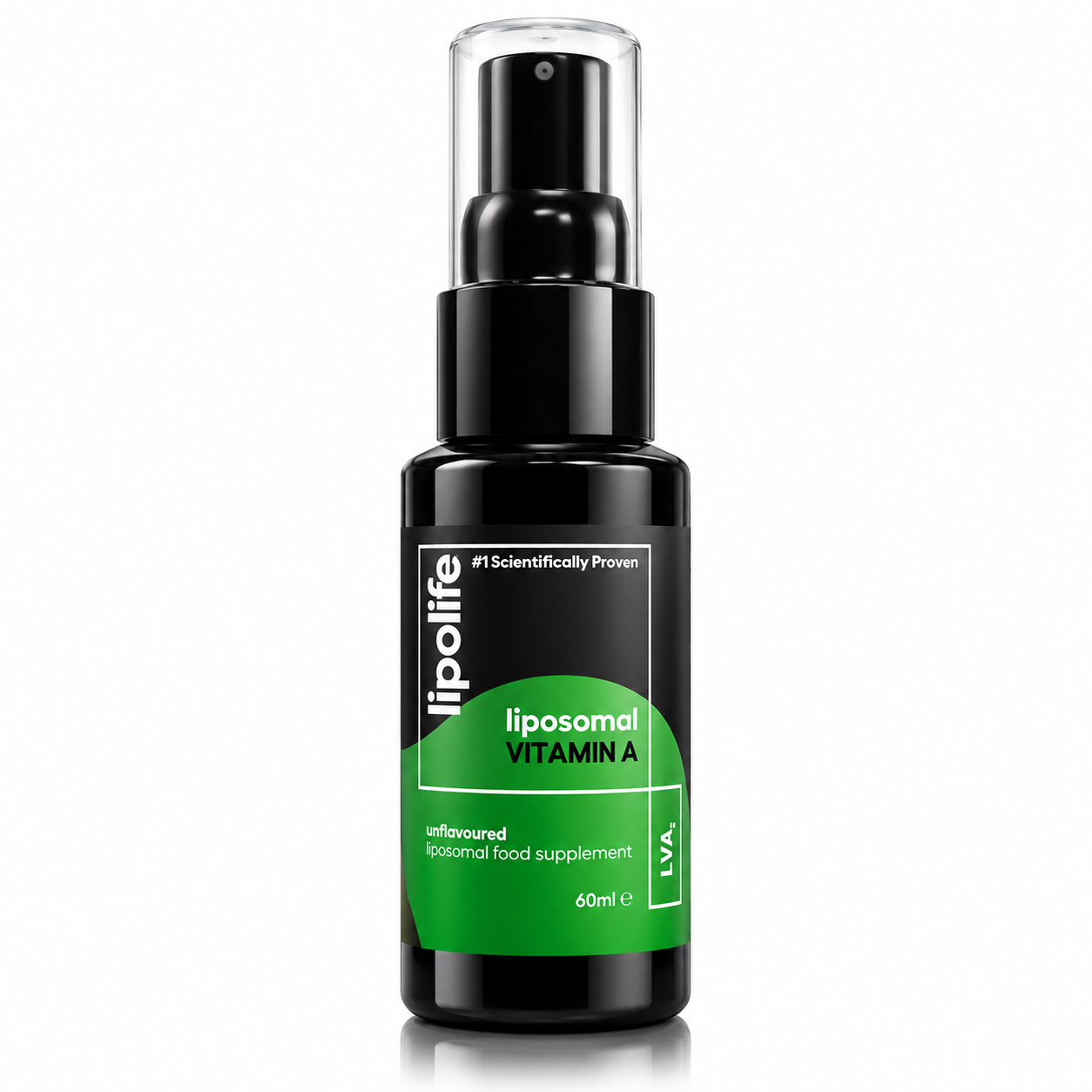
Liposomal Vitamin A | Advanced Absorption, Vision, Immunity, Skin & Cellular Health
Discover the remarkable biological importance of Vitamin A with Liposomal Vitamin A, an advanced formulation combining preformed Retinyl Palmitate with innovative liposomal delivery technology. Vitamin A is one of the body's most versatile essential nutrients, supporting everything from vision and immune defence to skin integrity, cellular development and normal tissue maintenance. Its role in eye health is particularly fascinating. Within the retina, Vitamin A is converted into retinal, a compound required for the formation of rhodopsin, the light-sensitive pigment found in rod cells that enables vision in dim lighting. Without adequate Vitamin A, the visual cycle becomes impaired, potentially affecting the eyes' ability to adapt to darkness. Beyond vision, Vitamin A plays a fundamental role in maintaining the epithelial tissues that line the skin, respiratory tract, digestive system and other protective surfaces throughout the body. These tissues form an important first line of defence against environmental challenges, while Vitamin A also contributes directly to normal immune system function. Its involvement in normal Iron metabolism adds another dimension to its nutritional importance, demonstrating how this remarkable vitamin supports several interconnected systems essential to everyday health and vitality.
What distinguishes this formula is its use of Retinyl Palmitate, a preformed source of Vitamin A combined with advanced liposomal technology. Unlike Beta-Carotene, the plant-derived provitamin A found in foods such as carrots and sweet potatoes, Retinyl Palmitate supplies Vitamin A in a form that does not depend on the body's variable carotenoid-to-retinol conversion process. Once absorbed, Retinyl Palmitate can be processed into retinol and subsequently converted into biologically active Vitamin A compounds according to the body's requirements. Retinol is particularly important for the visual cycle, while retinoic acid acts as a signalling molecule that helps regulate gene expression, cellular differentiation and tissue development. The formula incorporates Vitamin A into a phospholipid-based delivery system using non-GMO Sunflower Phospholipids. These specialised lipid molecules share structural similarities with the phospholipids found in human cell membranes and are used in sophisticated nutrient delivery systems. Because Vitamin A is fat-soluble, lipid-based formulations are especially interesting for supporting its transport and absorption. Liposomal technology is designed to improve nutrient delivery, although the degree of absorption advantage depends on the specific formulation. By combining preformed Vitamin A with plant-derived phospholipids, this supplement offers a modern alternative to conventional Vitamin A preparations.
Vitamin A's influence extends deep into cellular biology, making it particularly valuable for those interested in skin health, immune resilience and long-term nutritional optimisation. Through its active metabolite retinoic acid, Vitamin A helps regulate cellular differentiation, the process through which immature cells develop into specialised cells with specific functions. This is especially important for the maintenance of skin and mucous membranes, where healthy cell development supports the integrity of the body's protective barriers. Vitamin A also contributes to the normal functioning of immune cells and the maintenance of mucosal immunity, helping the body sustain its natural defences. Its role in normal Iron metabolism further connects it with essential nutritional processes involved in maintaining healthy physiological function. Presented in a convenient, unflavoured 60ml spray bottle, this vegan-friendly formula provides 1,500mcg of Vitamin A per recommended five-spray serving, equivalent to 188% of the Nutrient Reference Value. Manufactured in the UK and formulated with non-GMO Sunflower Phospholipids, it brings together established vitamin science and modern nutrient delivery technology. From supporting normal vision and immune defence to maintaining healthy skin, mucous membranes and cellular differentiation, Liposomal Vitamin A delivers comprehensive nutritional support through an advanced, carefully designed formulation.
Q: Why is Liposomal Vitamin A considered more advanced than conventional Vitamin A supplements?
A: Liposomal Vitamin A uses a phospholipid-based delivery system designed to support efficient absorption of this essential fat-soluble vitamin. Phospholipids are specialised lipid molecules similar to those found in human cell membranes, making them useful carriers for nutrients. By incorporating Vitamin A into a lipid-based structure, liposomal technology aims to improve its delivery through the digestive environment. Although not every liposomal formulation has been proven superior to conventional supplements, this approach offers a sophisticated alternative to traditional tablets and capsules.
Q: What makes Retinyl Palmitate a superior choice to Beta-Carotene?
A: Retinyl Palmitate is a preformed source of Vitamin A, meaning it does not require the conversion process needed to turn plant-derived Beta-Carotene into usable Vitamin A. This distinction is particularly relevant because Beta-Carotene conversion efficiency varies considerably between individuals due to genetics, dietary factors and nutritional status. Retinyl Palmitate provides a more predictable source of Vitamin A, although Beta-Carotene has the advantage of being converted according to the body's requirements, reducing the risk of excessive preformed Vitamin A intake.
Q: How does Vitamin A support night vision and the ability to see in darkness?
A: Vitamin A is essential for producing 11-cis-retinal, a specialised molecule that combines with the protein opsin to form rhodopsin within the retina's rod cells. Rhodopsin detects low levels of light, enabling the eyes to function in dim environments. When light strikes rhodopsin, retinal changes shape and initiates the signalling process that allows the brain to interpret visual information. Inadequate Vitamin A can interfere with this visual cycle, making difficulty adapting to darkness one of the earliest recognised signs of deficiency.
Q: Can Vitamin A improve eyesight and protect long-term eye health?
A: Vitamin A contributes to the maintenance of normal vision by supporting the retina's light-detection processes and the health of the eye's surface tissues. It is also important for maintaining healthy conjunctival and corneal cells. Severe deficiency can cause night blindness and progressive damage to the ocular surface. Maintaining adequate Vitamin A is therefore essential for eye health, although taking additional Vitamin A beyond normal requirements does not generally sharpen eyesight or correct conditions such as short-sightedness.
Q: What role does Vitamin A play in skin renewal and cellular regeneration?
A: Vitamin A contributes to the maintenance of normal skin and plays a fundamental role in cellular differentiation. Its active metabolite, retinoic acid, interacts with nuclear receptors that influence gene expression and regulate how cells mature and specialise. These processes are particularly important in epithelial tissues, where cells undergo continuous renewal. Adequate Vitamin A helps maintain normal skin structure and function, although oral supplementation should not be confused with the targeted effects of prescription topical retinoids.
Q: How does Vitamin A support collagen production and skin ageing?
A: Vitamin A-derived retinoids are involved in cellular signalling pathways that influence skin maintenance and extracellular matrix regulation. Topical retinoids have been extensively studied for their effects on collagen metabolism and photoaged skin. However, evidence from topical treatments cannot automatically be applied to oral Vitamin A supplements. Maintaining adequate dietary Vitamin A supports normal skin health, but taking extra Vitamin A has not been established as a reliable method of increasing collagen production or reversing visible skin ageing.
Q: Why is Vitamin A important for immune system function?
A: Vitamin A contributes to normal immune function through its involvement in immune cell development, differentiation and regulation. Retinoic acid influences the activity of several immune cell populations, including T cells and B cells, while Vitamin A also supports the epithelial barriers that help protect the body from environmental pathogens. Adequate Vitamin A is particularly important for maintaining balanced immune responses and normal mucosal immunity.
Q: How does Vitamin A strengthen the body's mucous membranes?
A: Vitamin A contributes to the maintenance of normal mucous membranes, including those lining the respiratory, digestive and urinary tracts. These specialised tissues form protective barriers and help regulate the interaction between the body and its external environment. Vitamin A supports normal epithelial cell differentiation and the development of mucus-producing cells, making it an important nutrient for maintaining the structural integrity of these protective surfaces.
Q: What is the relationship between Vitamin A and gut health?
A: Vitamin A helps maintain the normal epithelial lining of the digestive tract and participates in immune signalling within the intestinal environment. Retinoic acid is involved in regulating intestinal immune cell activity and supporting normal mucosal immune responses. These functions make adequate Vitamin A important for maintaining the gut's protective barrier and normal immune balance. However, supplementation has not been established as a treatment for digestive disorders or increased intestinal permeability.
Q: How does Vitamin A influence gene expression and cellular differentiation?
A: Vitamin A is converted into biologically active retinoic acid, which binds to specialised nuclear receptors known as retinoic acid receptors (RARs) and retinoid X receptors (RXRs). These receptors regulate the expression of genes involved in cell growth, differentiation and tissue development. This makes Vitamin A particularly important during periods of growth and for the ongoing maintenance of specialised tissues throughout the body.
Q: Why is Vitamin A important for healthy Iron metabolism?
A: Vitamin A contributes to normal Iron metabolism and is involved in biological processes that influence Iron mobilisation and utilisation. Inadequate Vitamin A status can interfere with normal Iron handling and may contribute to anaemia in some circumstances. Maintaining sufficient Vitamin A alongside adequate Iron intake supports the body's normal nutritional requirements for healthy blood formation. However, Vitamin A does not replace Iron supplementation when an Iron deficiency has been identified.
Q: How does Vitamin A interact with Zinc in the body?
A: Zinc is involved in several aspects of Vitamin A metabolism, including the synthesis of retinol-binding protein, which helps transport Vitamin A through the bloodstream. Zinc-dependent enzymes also participate in the conversion of retinol into other Vitamin A metabolites. Consequently, significant Zinc deficiency can interfere with normal Vitamin A metabolism. Maintaining adequate levels of both nutrients supports their complementary biological functions.
Q: Why is Vitamin A classified as a fat-soluble vitamin?
A: Vitamin A dissolves in fats rather than water and is normally absorbed alongside dietary lipids. Its absorption involves bile salts, intestinal micelles and specialised lipid transport pathways. Unlike most water-soluble vitamins, preformed Vitamin A can be stored in substantial quantities, particularly within the liver. This allows the body to maintain reserves but also means excessive supplementation over time can lead to accumulation, making appropriate dosing especially important.
Q: What are the advantages of Sunflower Phospholipids in Liposomal Vitamin A?
A: Non-GMO Sunflower Phospholipids provide the lipid-based components used in the formula's advanced delivery system. Their molecular structure allows them to organise into microscopic assemblies capable of carrying fat-soluble substances. These properties make phospholipids particularly interesting for Vitamin A formulations, where lipid interactions already play an important role in normal absorption. Sunflower-derived phospholipids also offer a plant-based alternative to animal-derived delivery ingredients.
Q: Can Vitamin A support healthy hair and scalp function?
A: Vitamin A contributes to the maintenance of normal skin, including the specialised epithelial tissues associated with the scalp and hair follicles. Retinoid signalling also participates in cellular differentiation processes relevant to normal follicle biology. However, Vitamin A must remain within an appropriate physiological range. Both deficiency and excessive intake can be associated with hair problems, including shedding, so higher doses should not be viewed as a shortcut to faster hair growth.
Q: How does Vitamin A contribute to reproductive health and normal development?
A: Vitamin A plays an important role in normal cellular differentiation and developmental signalling. Retinoic acid participates in biological pathways involved in reproductive cell development and embryonic growth. Adequate Vitamin A is therefore essential for normal reproductive physiology, but excessive preformed Vitamin A can be harmful during pregnancy. Because this formula provides 1,500mcg of preformed Vitamin A per serving, pregnant women and those planning pregnancy should seek professional advice before use.
Q: How much Vitamin A does each serving provide, and is more always better?
A: Each recommended five-spray serving provides 1,500mcg of Vitamin A as Retinyl Palmitate, equivalent to 188% of the adult Nutrient Reference Value. This supplies a substantial amount of preformed Vitamin A in a convenient liquid format. Because Vitamin A can accumulate in the liver, higher intake does not necessarily produce greater benefits. Adults should consider their total intake from food, supplements and fortified products, particularly cod liver oil and other supplements containing preformed Vitamin A.
Q: Who may benefit most from Liposomal Vitamin A supplementation?
A: Liposomal Vitamin A may be relevant for adults with inadequate Vitamin A intake, restricted dietary patterns or particular nutritional requirements. Vitamin A is essential for normal vision, immune function, skin and mucous membrane maintenance, Iron metabolism and cellular differentiation. Its preformed Retinyl Palmitate source may be particularly useful when conversion from dietary Beta-Carotene is inefficient. However, supplementation should reflect individual requirements, and people with liver conditions or those taking retinoid medicines should obtain professional advice before using additional preformed Vitamin A.
Other Ingredients: Ultra-Pure Water, Phospholipids (non GMO Sunflower, Lipoid), Glycerol, Ethanol, Mixed Tocopherols (antioxidant), Tocofersolan (antioxidant), Potassium Sorbate (preservative), Citric Acid (acidity regulator).
NOTE: If pregnant or nursing check with your doctor before use.
Thanks for subscribing!
This email has been registered!