Currency
Currency


Couldn't load pickup availability
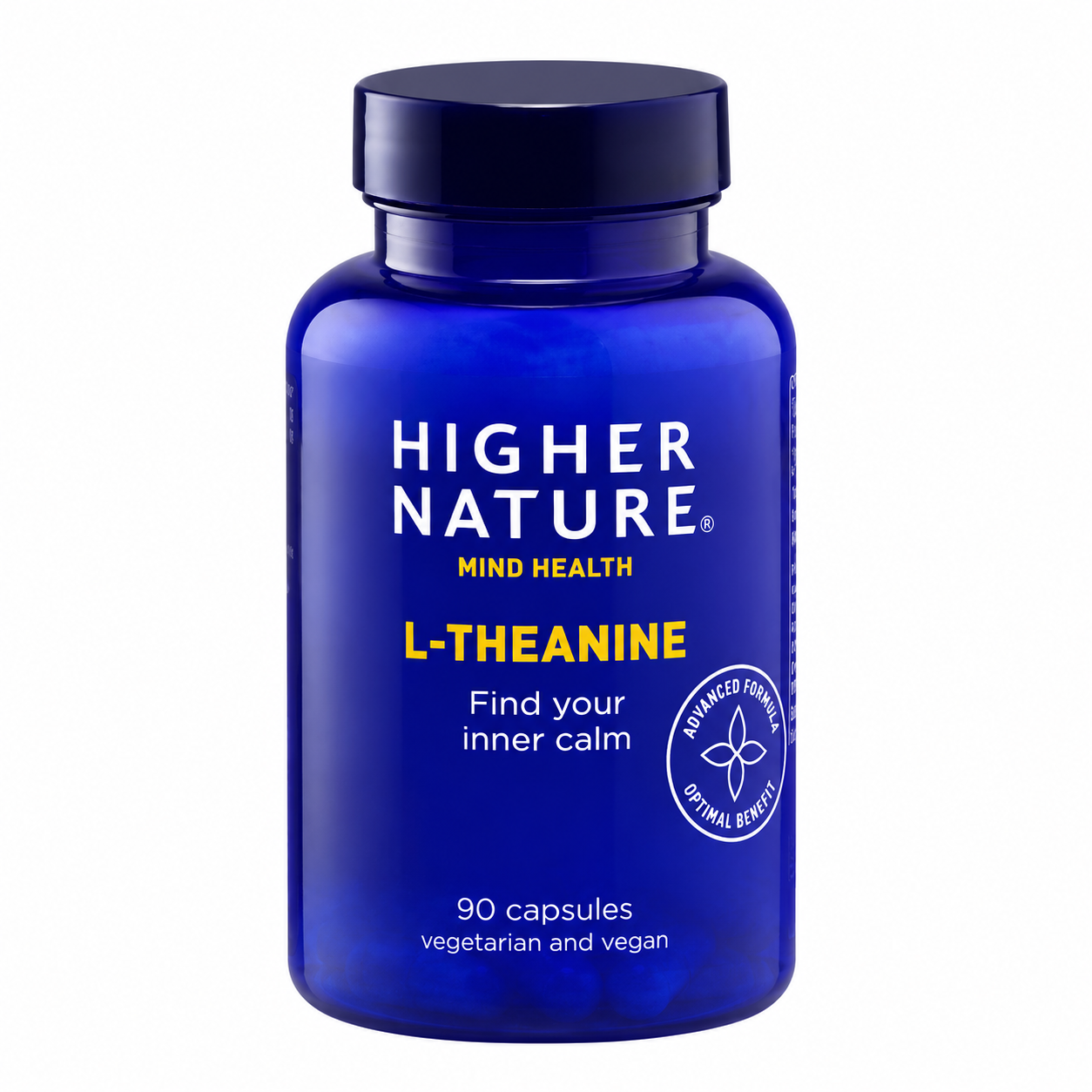
L-Theanine 90 x 100mg | Calm Focus, Stress Support, Mental Clarity & Nervous System Balance
Modern life places extraordinary demands on the brain and nervous system. Persistent mental stimulation, demanding workloads, disrupted sleep and psychological pressure can make it difficult to remain calm while maintaining concentration and productivity. L-Theanine offers a targeted nutritional approach to supporting mental composure, cognitive clarity and relaxation. This naturally occurring amino acid, found in green tea, is particularly valued for its ability to encourage relaxed alertness rather than sedation. Human research suggests L-Theanine may help moderate perceived stress, support attention during mentally demanding activities and improve certain aspects of sleep quality. Unlike conventional stimulants, its appeal lies in supporting a calmer, more balanced mental state without deliberately increasing nervous system stimulation. This makes it particularly interesting for professionals, students, biohackers and anyone seeking sustained mental performance alongside greater psychological resilience.
The science behind L-Theanine involves its interaction with neurological signalling and the balance between relaxation and cognitive arousal. Research using electroencephalography (EEG) has explored its influence on alpha brainwave activity, a pattern associated with relaxed wakefulness, mental composure and certain forms of focused attention. L-Theanine has also been investigated for its interaction with neurotransmitter systems involving glutamate, GABA and dopamine, although its precise effects in humans remain under investigation. Rather than functioning as a conventional sedative, L-Theanine may help promote relaxation while preserving the alertness required for productive mental activity. This formulation combines 100mg of TheaGreen® L-Theanine with Vitamin B5 (Pantothenic Acid), which contributes to normal mental performance and reduced tiredness and fatigue, and Vitamin B6 as Pyridoxal-5-Phosphate (P5P), which contributes to normal psychological function, nervous system activity and hormonal regulation. Together, these nutrients provide complementary nutritional support for mental wellbeing, everyday cognitive demands and normal neurological function.
Derived from green tea and formulated with carefully selected B vitamins, this premium L-Theanine supplement provides a focused approach to maintaining mental balance in an increasingly overstimulated world. Each capsule delivers 100mg of TheaGreen® L-Theanine alongside 6mg of Vitamin B5 and 1.4mg of Vitamin B6, supplying 100% of the Nutrient Reference Value for both vitamins. Its vegan formulation is suitable for those seeking a convenient, non-stimulant addition to their daily nutritional routine. Whether your priority is remaining composed during challenging situations, maintaining concentration throughout demanding work or supporting relaxation at the end of the day, L-Theanine offers a scientifically investigated approach to calm, clear-headed wellbeing. A considered combination of amino acid nutrition and essential B vitamins, designed to support a more balanced relationship between mental performance, relaxation and nervous system health.
Q: Why should I invest in L-Theanine with Vitamins B5 and B6?
A: Mental performance is not simply about increasing stimulation. The ability to remain composed, attentive and psychologically balanced is equally important, particularly during periods of sustained cognitive demand. L-Theanine is a scientifically investigated green tea-derived amino acid with promising research involving relaxation, stress responses, attention and sleep quality. This formula combines 100mg of TheaGreen® L-Theanine with Vitamin B5 for normal mental performance and active Vitamin B6 (P5P) for normal nervous system and psychological function. The result is a considered, non-stimulant nutritional formula for people who value calm focus, mental clarity and everyday nervous system support. Rather than relying on another source of stimulation, it offers a measured approach to supporting the balance between relaxation and performance.
Q: How does L-Theanine influence alpha brainwave activity and the brain's ability to enter a state of relaxed focus?
A: Alpha brainwaves, typically measured between 8–13 Hz, are associated with relaxed wakefulness and certain forms of internally directed attention. EEG research suggests L-Theanine can influence alpha activity, particularly during resting or attention-related tasks. This makes it interesting for people seeking mental calm without conventional sedation. Rather than simply making the brain less active, L-Theanine may help create conditions associated with relaxed alertness. However, alpha activity varies considerably between individuals, and an increase does not automatically translate into improved cognitive performance.
Q: Can L-Theanine support GABA activity without producing the sedation associated with conventional calming compounds?
A: GABA is the brain's principal inhibitory neurotransmitter, helping regulate neuronal excitability and maintain a balance between stimulation and inhibition. Preclinical research suggests L-Theanine may influence GABA-related signalling, alongside other neurotransmitter systems. Unlike pharmaceutical sedatives, L-Theanine is not established as a direct GABA receptor agonist. Its appeal lies in preliminary evidence suggesting it may encourage relaxation without pronounced drowsiness. This makes it particularly interesting for people who want to remain mentally engaged while managing everyday psychological pressure.
Q: What is the relationship between L-Theanine, glutamate signalling and neurological balance?
A: Glutamate is the brain's primary excitatory neurotransmitter, essential for learning, memory formation and communication between neurons. However, tightly regulated glutamate activity is important for normal neurological function. L-Theanine has structural similarities to glutamate, and laboratory studies suggest it may interact with certain glutamate-related pathways. These findings have generated interest in its potential neuromodulatory properties. Nevertheless, direct evidence that oral L-Theanine reliably corrects excessive glutamate activity in humans remains limited. Its established research interest centres on relaxation, attention and responses to everyday stress.
Q: Can L-Theanine help regulate cortisol responses during periods of psychological stress?
A: Cortisol is an essential hormone involved in energy regulation, circadian rhythms and the body's response to stress. Some controlled human studies have investigated whether L-Theanine can influence physiological stress markers, including cortisol, heart rate and subjective tension. Results suggest possible benefits in certain circumstances, although findings are not consistent enough to establish L-Theanine as a reliable cortisol-lowering treatment. Its potential value lies in supporting a calmer response to demanding situations rather than suppressing cortisol, which performs many necessary biological functions.
Q: How does L-Theanine affect the sympathetic and parasympathetic nervous systems?
A: The autonomic nervous system regulates involuntary processes such as heart rate, breathing and digestion. Sympathetic activity prepares the body for demanding situations, while parasympathetic activity supports recovery and rest. Small human studies have explored whether L-Theanine influences physiological indicators of stress and autonomic regulation. Some findings suggest a reduction in stress-related arousal, although evidence for a direct or consistent shift towards parasympathetic dominance is limited. L-Theanine is therefore best understood as a potential aid to relaxation rather than a proven method of resetting autonomic nervous system activity.
Q: Can L-Theanine improve cognitive performance when the brain is under psychological pressure?
A: Stress and distraction can interfere with working memory, sustained attention and the ability to process information efficiently. L-Theanine has been studied for its potential to support attention and reduce subjective stress during mentally demanding tasks. Some trials report improvements in selected measures of attention or executive function, while others show modest or inconsistent results. The strongest cognitive findings often involve L-Theanine combined with caffeine. Taken alone, L-Theanine may be particularly appealing when maintaining composure is as important as achieving mental alertness.
Q: Why is L-Theanine often combined with caffeine for cognitive performance and sustained attention?
A: Caffeine increases alertness primarily by blocking adenosine receptors, but higher intakes can also produce nervousness, restlessness and difficulty relaxing. L-Theanine has been investigated alongside caffeine because their effects may complement one another. Controlled studies suggest certain combinations can improve aspects of attention, task switching and accuracy over short periods. L-Theanine may also moderate some subjective effects of caffeine, although this is not guaranteed. The combination is particularly interesting for people seeking alertness with a calmer mental experience, but optimal amounts and individual responses vary.
Q: Can L-Theanine support dopamine regulation without acting as a conventional stimulant?
A: Dopamine contributes to motivation, reward processing, movement and cognitive control. Laboratory and animal studies suggest L-Theanine may influence dopamine-related signalling under certain conditions. However, there is insufficient human evidence to conclude that supplementation reliably increases dopamine or improves motivation through this mechanism. Unlike caffeine or prescription stimulants, L-Theanine is not primarily used to increase nervous system activation. Its potential benefits for mental performance appear more closely associated with relaxation, attention and the management of psychological stress.
Q: What role might L-Theanine play in supporting neuroplasticity and brain-derived neurotrophic factor (BDNF)?
A: Neuroplasticity describes the brain's ability to adapt through changes in neuronal connections and signalling. BDNF is a protein involved in neuronal survival, learning and synaptic plasticity. Preclinical studies have explored whether L-Theanine can influence pathways associated with neuronal resilience and neurotrophic activity. These findings are scientifically interesting, but evidence that ordinary oral supplementation meaningfully increases BDNF or enhances neuroplasticity in healthy humans is not established. L-Theanine should therefore be viewed as a promising subject of neurological research rather than a proven neuroplasticity enhancer.
Q: How does L-Theanine influence sleep quality without functioning as a traditional sedative?
A: Sleep depends on coordinated neurological processes involving circadian timing, sleep pressure and the regulation of mental and physiological arousal. L-Theanine is not generally considered a conventional hypnotic or sedative. Instead, research suggests it may support sleep indirectly by encouraging relaxation and reducing certain aspects of stress-related mental activity. Some clinical studies have reported improvements in subjective sleep quality, although evidence remains limited and results vary. This makes L-Theanine particularly interesting for people whose difficulty unwinding contributes to poor sleep.
Q: Can L-Theanine increase deep sleep, REM sleep or overall sleep efficiency?
A: Deep sleep and REM sleep perform distinct roles in normal sleep architecture, including physiological restoration, memory processing and emotional regulation. Although L-Theanine has been investigated for sleep quality, there is insufficient consistent human evidence to conclude that it reliably increases deep sleep or REM sleep duration. Some studies suggest improvements in subjective sleep measures or selected objective outcomes. Its most plausible practical benefit is supporting relaxation before bedtime, rather than directly controlling individual sleep stages.
Q: Is L-Theanine useful for people who experience racing thoughts before bedtime?
A: Persistent mental activity can make the transition from wakefulness to sleep more difficult, particularly after demanding or emotionally stimulating days. L-Theanine has attracted interest because it may support a calmer mental state without necessarily causing strong drowsiness. Small human studies suggest potential improvements in relaxation and some sleep-related outcomes. Although it is not a treatment for insomnia or anxiety disorders, it may complement an evening routine that includes reduced light exposure, consistent sleep timing and fewer stimulating activities.
Q: What is the connection between L-Theanine, heart rate variability and physiological stress resilience?
A: Heart rate variability, or HRV, reflects variation in the time intervals between successive heartbeats and is influenced by autonomic nervous system activity. Researchers have investigated whether L-Theanine affects cardiovascular responses to psychological stress, including heart rate and autonomic markers. Some small studies suggest favourable changes under particular experimental conditions. However, evidence that L-Theanine consistently increases HRV or improves long-term autonomic resilience is insufficient. HRV is also influenced by sleep, physical fitness, illness, alcohol consumption and numerous other factors.
Q: Can L-Theanine support emotional regulation and psychological resilience during demanding periods?
A: Emotional regulation depends on interactions between attention, memory, physiological arousal and neural networks involved in evaluating stressful experiences. L-Theanine has been studied for its potential to reduce subjective stress and promote relaxation, with some controlled trials reporting encouraging results. A calmer mental state may make everyday demands feel more manageable, although this does not establish a direct improvement in emotional regulation. L-Theanine is best considered a possible nutritional complement to established approaches such as adequate sleep, exercise and stress-management techniques.
Q: How does L-Theanine interact with the brain's default mode network and repetitive thinking?
A: The default mode network is a collection of interconnected brain regions involved in self-referential thought, autobiographical memory and internally directed mental activity. Excessive repetitive thinking is sometimes associated with altered activity in these networks, but the relationship is complex. Although L-Theanine has been investigated using EEG and other neurological measures, direct human evidence demonstrating that it reliably regulates default mode network activity is currently insufficient. Its potential to support relaxation is more established than any specific effect on this brain network.
Q: Can L-Theanine help reduce the feeling of being mentally overstimulated while preserving productivity?
A: Mental overstimulation can arise when demanding tasks, environmental distractions and psychological pressure compete for limited attentional resources. L-Theanine is particularly interesting because research suggests it may support relaxation without producing the pronounced sedation associated with some calming substances. This creates a potential advantage for individuals who want to remain alert while feeling less mentally tense. Benefits vary, however, and improvements in productivity cannot be guaranteed. Maintaining realistic workloads, adequate sleep and regular breaks remains essential for sustained cognitive performance.
Q: Why is L-Theanine considered different from adaptogenic herbs such as Ashwagandha and Rhodiola?
A: L-Theanine is a naturally occurring amino acid found in tea, whereas Ashwagandha and Rhodiola are botanical preparations containing numerous biologically active compounds. Their proposed mechanisms and clinical research differ substantially. L-Theanine is primarily investigated for relaxation, attention and stress-related outcomes, while adaptogenic herbs are studied across broader areas of perceived stress, fatigue and physiological adaptation. L-Theanine's appeal lies in its relatively focused chemical identity and non-stimulant profile. However, none of these ingredients should be assumed to produce identical effects or to be interchangeable.
Q: How does L-Theanine compare with Magnesium for nervous system support and relaxation?
A: Magnesium is an essential mineral required for hundreds of enzymatic reactions and contributes to normal nervous system and psychological function. L-Theanine is a non-essential amino acid investigated for its effects on relaxation, attention and stress responses. Magnesium supports fundamental physiological processes, whereas L-Theanine is used more specifically for its potential calming effects. They operate through different biological pathways and may form part of the same nutritional routine, but there is limited clinical evidence demonstrating that combining them produces superior relaxation or sleep outcomes.
Q: Why does this L-Theanine formula contain Vitamin B5, and how does Pantothenic Acid support mental performance?
A: Vitamin B5, also known as Pantothenic Acid, is required for the synthesis of coenzyme A, a molecule central to energy metabolism and numerous biochemical reactions. It also contributes to the normal synthesis and metabolism of certain steroid hormones, Vitamin D and some neurotransmitters. Importantly, Pantothenic Acid contributes to normal mental performance and the reduction of tiredness and fatigue. Its inclusion provides essential nutritional support alongside L-Theanine's potential effects on relaxation and attention. The two ingredients have different roles rather than an established synergistic mechanism.
Q: What makes Pyridoxal-5-Phosphate (P5P) an interesting form of Vitamin B6 for neurological function?
A: Pyridoxal-5-Phosphate is the biologically active coenzyme form of Vitamin B6. It participates in numerous enzymatic reactions, including those involved in amino acid metabolism and neurotransmitter synthesis. Vitamin B6 contributes to normal nervous system function, psychological function and the regulation of hormonal activity. P5P is particularly relevant to neurological biochemistry because enzymes involved in producing neurotransmitters such as GABA, dopamine and serotonin require Vitamin B6-dependent reactions. However, taking additional P5P does not necessarily increase neurotransmitter production when Vitamin B6 status is already adequate.
Q: Can L-Theanine cross the blood-brain barrier, and why is this important?
A: The blood-brain barrier is a specialised protective interface that regulates the movement of substances from the bloodstream into the central nervous system. Experimental evidence indicates that L-Theanine can enter the brain through amino acid transport mechanisms, providing a plausible basis for its neurological effects. Its ability to reach the central nervous system is relevant to research exploring attention, relaxation and neurotransmitter signalling. Nevertheless, crossing the blood-brain barrier does not by itself establish clinical effectiveness, and the relationship between oral dosage, brain exposure and measurable benefits remains an active research area.
Q: How quickly might L-Theanine influence relaxation and mental focus after consumption?
A: L-Theanine is absorbed following oral consumption, and human pharmacokinetic research suggests blood concentrations typically rise within the first hour or two. Some studies have examined short-term effects on relaxation, attention and physiological stress responses within this general period. However, the timing and intensity of noticeable benefits vary between individuals, and some people may experience little perceptible change. L-Theanine is not comparable to an immediate-acting sedative, and effects reported in controlled studies should not be interpreted as guaranteed results from every dose.
Q: Is 100mg of L-Theanine a meaningful amount for cognitive and relaxation support?
A: Human clinical studies have investigated L-Theanine across a range of doses, commonly including 50–200mg and sometimes higher amounts. A 100mg serving falls within the range explored in research on relaxation, attention and stress-related outcomes. However, results depend on the study population, formulation, timing and whether L-Theanine is used alone or with caffeine. A 100mg capsule provides a convenient measured serving, but there is no universally established optimal dose for all individuals or outcomes. The manufacturer's directions and relevant product precautions should always be followed.
Q: What makes TheaGreen® L-Theanine different from simply drinking green tea?
A: Green tea naturally contains L-Theanine, but the quantity varies according to the tea variety, growing conditions, processing and brewing method. Tea also typically contains caffeine and numerous polyphenols, making its overall physiological effects different from those of a measured L-Theanine supplement. TheaGreen® provides a standardised L-Theanine ingredient, allowing a consistent amount to be included in each capsule. This is useful for individuals who want a predictable serving rather than relying on the variable amino acid content of brewed tea. The complete supplement formulation and its label precautions remain important.
Q: Why is a calm, alert mental state potentially more valuable than simply increasing stimulation?
A: Cognitive performance depends on an appropriate balance between alertness and arousal. Too little stimulation can impair attention, while excessive arousal may increase distraction, tension and errors during demanding tasks. This relationship is often discussed in connection with the Yerkes–Dodson principle, although actual cognitive performance is more complex. L-Theanine is interesting because it has been investigated for supporting relaxation while maintaining wakefulness. Its potential value is not in maximising stimulation, but in helping individuals maintain a more comfortable mental state during periods requiring concentration.
Other Ingredients: Capsule: hydroxypropyl methylcellulose, bulking agent: microcrystalline cellulose, anti-caking agents: silicon dioxide, magnesium stearate.
NOTE: Not suitable for pregnant or breastfeeding women or anyone under 18 years of age. If you have an existing medical condition or are taking medication, consult a healthcare professional before use. Do not exceed a daily intake of 800mg of (-)-epigallocatechin-3-gallate (EGCG). Avoid taking this supplement on the same day as other products containing green tea. Do not take on an empty stomach.
Thanks for subscribing!
This email has been registered!