Couldn't load pickup availability
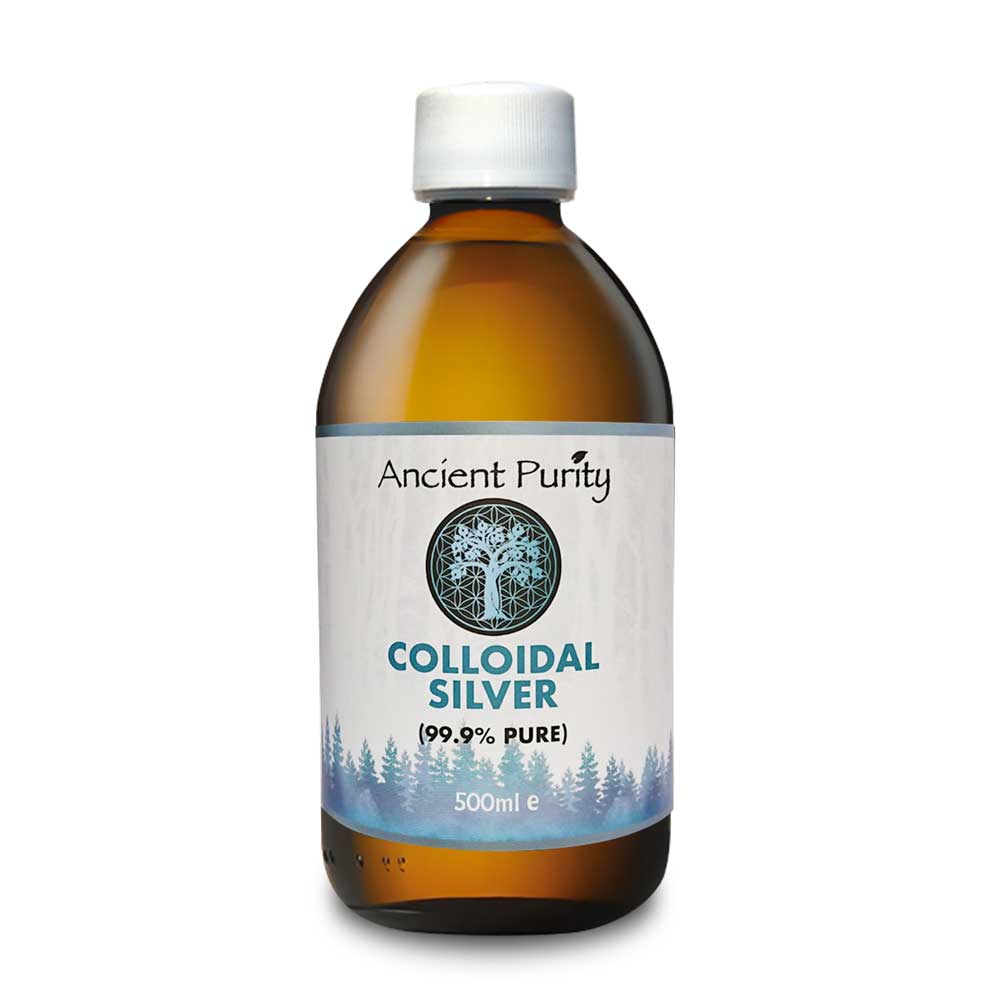
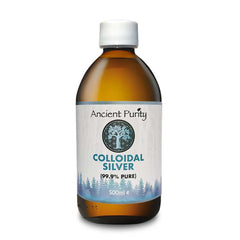
Ancient Purity Colloidal Silver – Nature’s Timeless Microbial Support | High-Stability, 10–20 PPM
Colloidal Silver has a centuries-long history in natural medicine, historically incorporated into protocols for infections and general wellness. Its tiny silver particles remain suspended in liquid, allowing for easy absorption and broad-spectrum support. Many health practitioners today acknowledge its benefits for maintaining healthy microbial balance, while others use it for topical or household applications.
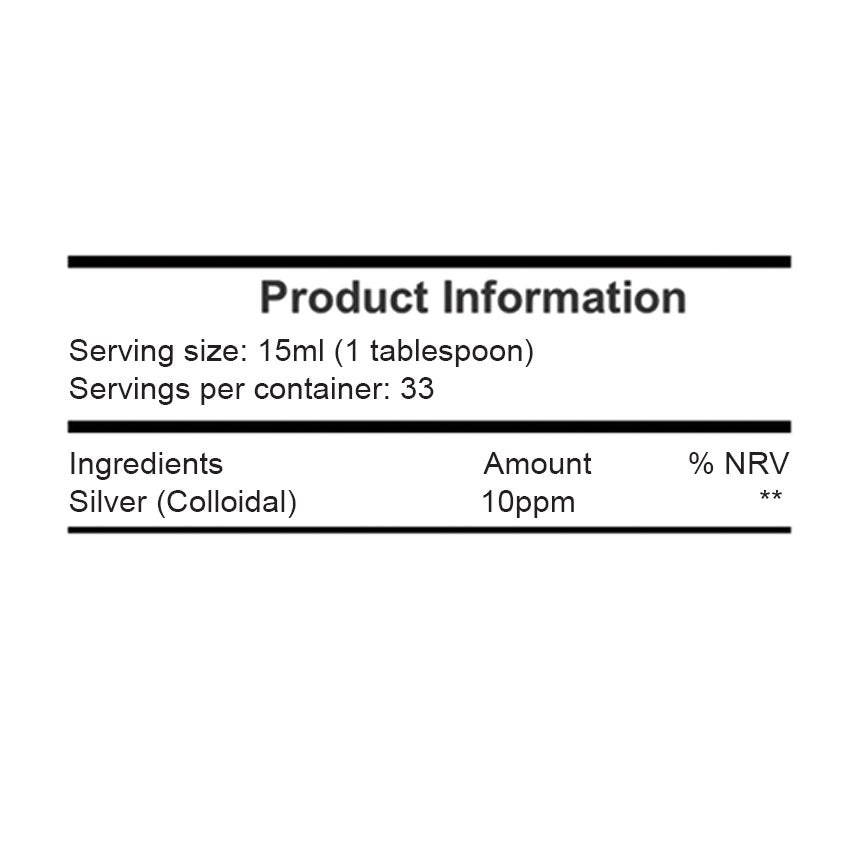
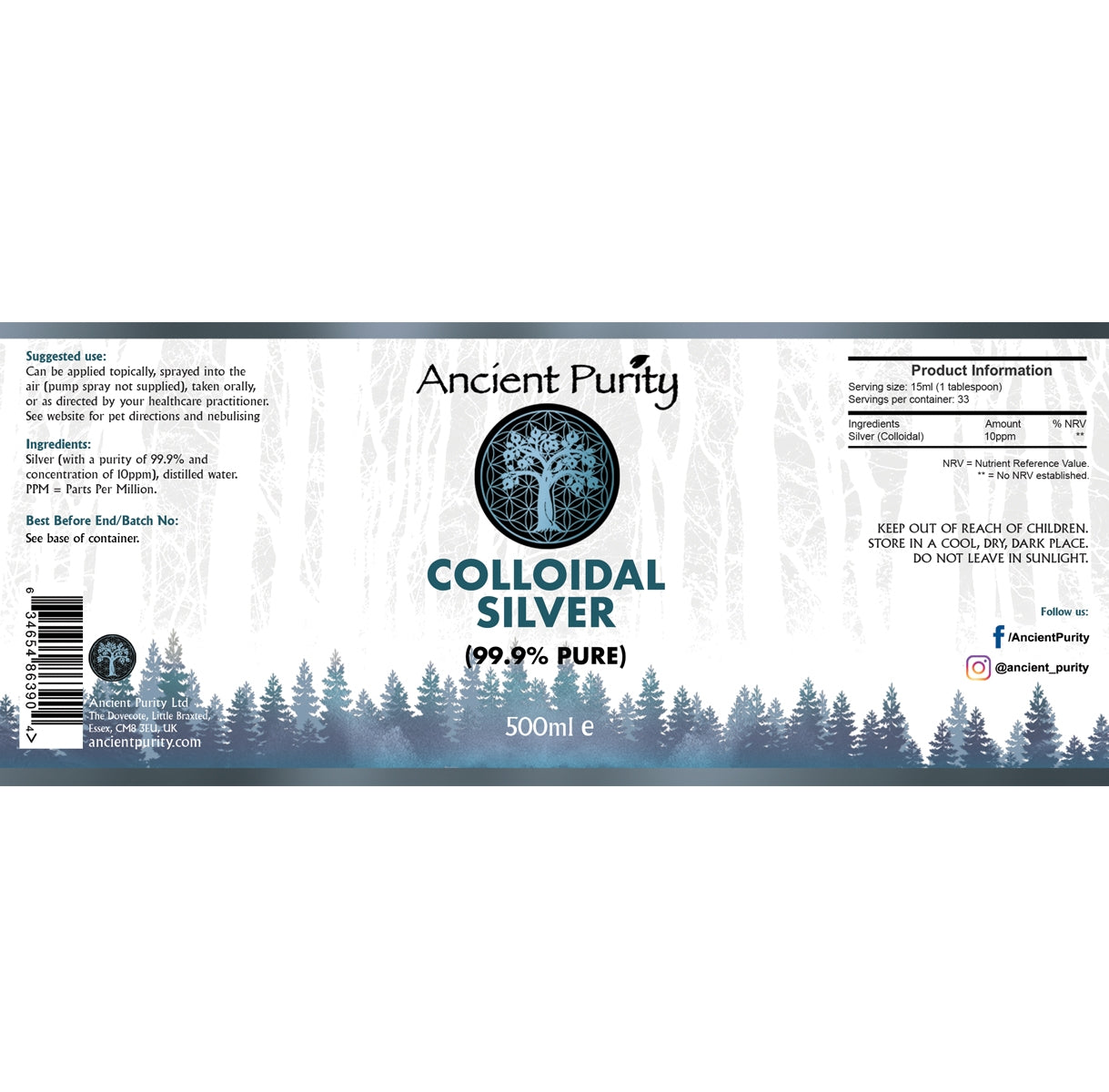
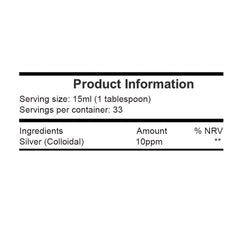
This colloidal silver is produced with 99.9% pure silver rods in ultra-pure water, ensuring a clean, stable suspension at 10–20 PPM. Bottled in Miron Dark Violet glass, it is protected from light and environmental degradation, preserving both quality and efficacy. Each batch is made under stringent standards, giving you confidence in the purity and safety of the product.
Choose between the 500ml standard bottle or the 100ml bottle with an interchangeable dropper and sprayer. The dropper allows precise application for eyes and ears, while the sprayer is ideal for skin, oral, or surface applications. This flexibility, combined with a high-quality colloidal formulation, makes it a versatile addition to your natural wellness toolkit.
Q: How does particle size and ppm affect the effectiveness of Colloidal Silver?
A: Smaller particles (typically 10 to 20 PPM) have a greater surface area and are thought to interact more efficiently with microbes, while PPM (parts per million) indicates concentration. High PPM isn’t always better, since overly concentrated silver may clump and be less bioavailable. We have used this Silver since 2010 and everyone was happy. If it ain't broke...
Q: Can Colloidal Silver cross the blood-brain barrier, and what are the implications?
A: Very small silver nanoparticles may cross the blood-brain barrier. This raises both potential interest for neuroprotective or antimicrobial applications in the brain, but also concerns about accumulation and long-term safety. We are legally not able to sell Colloidal Silver as an internal supplement so cannot advise further.
Q: How does Colloidal Silver interact with the gut microbiome?
A: It may reduce pathogenic bacteria, but it can also disturb beneficial gut flora if used excessively. Smart biohackers often cycle or microdose Colloidal Silver rather than continuous use, and combine with probiotics.
Q: Is there a hormetic effect from low-dose silver exposure?
A: Some researchers suggest very low levels may act as a mild stressor that upregulates antioxidant defences, though this area is still underexplored in humans.
Q: Can Colloidal Silver be used topically in ways that differ from oral use?
A: Yes. Topical application may reduce skin infections, support wound healing, or calm inflammatory skin conditions without the systemic risks associated with oral intake. Use the spray and dropper for this.
Q: Is topical use of Colloidal Silver functionally safer or less likely to cause systemic risks than oral ingestion?
A: Topical use minimises systemic exposure and is supported in wound care. However, broken skin or mucous membranes can still absorb nanoparticles, especially with repeated use. For systemic biohacking goals, topical-only is unlikely to provide meaningful systemic impact.
Q: How does Colloidal Silver influence oxidative stress markers and mitochondrial function?
A: Silver ions generate reactive oxygen species (ROS) as part of their antimicrobial mechanism. In vitro, this can modulate mitochondrial respiration and increase oxidative load. Some biohackers leverage this as a hormetic stressor, but chronic use could deplete antioxidants (e.g., glutathione). Co-supplementation with our NAC or Liposomal Vitamin C may mitigate risk.
Q: Are there known synergistic effects between colloidal silver and other compounds commonly used in biohacking (e.g., ozone therapy, herbal antimicrobials, peptides)?
A: Yes, Silver nanoparticles show synergistic antimicrobial effects with curcumin, green tea catechins, and ozone, often lowering the dose required of each. However, combining with other ROS-generating hacks could amplify oxidative burden, so antioxidant cycling is advised.
Q: How efficiently does the human body clear nano-silver, and where does it primarily deposit?
A: Clearance is slow. Accumulation primarily occurs in the liver, spleen, and skin. Renal clearance is partial, with larger nanoparticles persisting longer. Chronic overuse can lead to argyria (bluish skin discoloration) but more subtly, long-term tissue deposition is an underexplored risk.
Q: Which genetic or biochemical markers might influence an individual's tolerance or risk to Colloidal Silver?
A: Variants in metallothionein genes (metal-binding proteins), glutathione metabolism efficiency, and CYP pathways may all modulate tolerance. People with poor detox capacity (e.g., GSTM1-null genotype) may accumulate particles more readily.
Q: How does Colloidal Silver compare to ionic silver solutions or silver hydrosols?
A: Ionic silver is often cheaper and less stable, while true Colloidal suspensions provide nanoparticles. Hydrosols are marketed as more bioavailable, but differences in stability, purity, and safety need scrutiny. As I said earlier, we've supplied Colloidal Silver since 2010, it gets results. Companies are always looking to re-invent the wheel or have some unique new product. In my opinion Colloidal Silver is the only one proven over time to consistently get results, it's been around the longest, anything else again in my opinion is a gimmick. Thats not to say they don't work, but probably Colloidal Silver would of worked the same or better.
Q: What precautions reduce the risk of argyria (skin greying)?
A: Avoiding high ppm, poor-quality products, and long-term heavy dosing minimises this risk. True Colloidal Silver with very small particle size, used in moderation, carries far lower risk than ionic silver salts.
Q: Are there synergies between Colloidal Silver and other natural antimicrobials?
A: Colloidal Silver may enhance the effects of herbs like oregano oil, garlic, or berberine, and some studies show it potentiates antibiotics by weakening microbial resistance.
Q: How does Colloidal Silver interact with detox pathways?
A: The body does not actively metabolise silver; it deposits in tissues and is slowly excreted. Supporting detox through glutathione, sulphation, and regular sweating may help minimise accumulation.
Q: How do advanced users typically cycle Colloidal Silver for safety and effect?
A: Biohackers rarely take Colloidal Silver continuously. A common approach is short-term use during acute infection or high exposure risk, then stopping once resolved. Others microdose at low ppm a few days per week and pause regularly to reduce tissue build-up. Cycling with probiotic or gut-supporting phases helps maintain microbial balance while still gaining antimicrobial benefits.
Q: Why would I buy 100ml instead of the 500ml, the cost doesn't make sense?
A: With the 100ml you have the highest quality Miron Glass Bottle there is, a spray to apply topically and a dropper for ears and eyes etc. You can buy a little funnel and always top this bottle up using the large bottle. So you get all you need then just be economical going forward.
Q: Can I use Colloidal Silver on my cat?
A: Colloidal Silver is easy to administer since it doesn't have much of a taste or smell. It can also be used externally as it can be licked by the cat. Many cat owners will put Colloidal Silver on any scratches to help them heal. Colloidal Silver has antibacterial, antifungal, and antimicrobial properties. Since Colloidal Silver may work as a natural antibiotic, it may help to keep pesky infections at bay. Since cats are prone to UTIs and other infections, you may be tired of turning to expensive and potentially harmful remedies such as steroids and antibiotics. These can cause long-term side effects. Colloidal Silver is used by some in a cat's first aid kit as a natural antibiotic.
Q: Where is Colloidal Silver used?
A: Colloidal Silver is approved for topical application on skin infections, skin wounds, and in bandages and dressings for the treatment of burns.
Thanks for subscribing!
This email has been registered!